Corporate Tax Rates and Incentives in Portugal: A Complete Overview for Businesses
Portugal offers an attractive corporate tax landscape with competitive rates and a suite of incentives designed to foster investment and innovation. This comprehensive guide details the current corporate income tax regime, special tax benefits, and compliance requirements for businesses operating or considering establishing in Portugal, providing actionable insights for strategic planning.
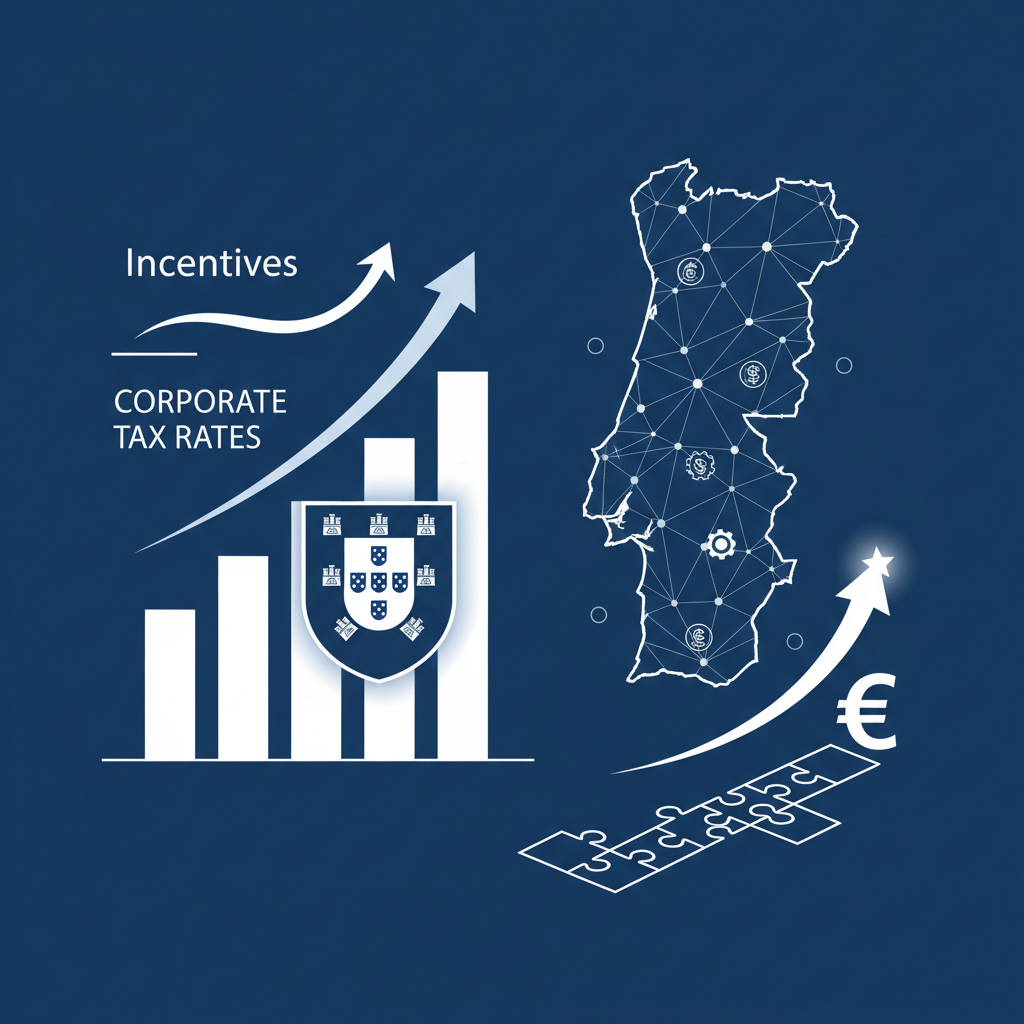
Portugal has emerged as an increasingly appealing destination for international businesses and entrepreneurs, not only for its quality of life but also for its evolving and often advantageous corporate tax environment. Understanding the intricacies of Portugal's corporate tax rates and the array of incentives available is crucial for any company looking to establish or expand its operations within the country. This article provides a comprehensive overview, delving into the standard tax regime, special rates, key incentives, and essential compliance considerations.
Understanding Corporate Income Tax (CIT) in Portugal
Corporate Income Tax (Imposto sobre o Rendimento das Pessoas Colectivas - IRC) is levied on the profits of companies and other legal entities operating in Portugal. The standard corporate tax rate in Portugal is 21%. However, this rate can vary significantly based on the company's size, location, and specific activities, making a detailed understanding essential for effective financial planning.
Standard Rates and Surcharges
While the general IRC rate is 21%, it's important to consider additional surcharges that can apply. There are two main types of surcharges:
-
State Surcharge (Derrama Estadual): This surcharge applies to taxable profits exceeding certain thresholds. For taxable profits between EUR 1.5 million and EUR 7.5 million, a rate of 3% applies. For profits exceeding EUR 7.5 million, the rate increases to 5%. For profits above EUR 35 million, the rate is 9%. This means large corporations can face an effective combined state tax rate higher than the base 21%.
-
Municipal Surcharge (Derrama Municipal): Municipalities in Portugal have the discretion to levy a local surcharge on taxable profits, up to a maximum of 1.5%. The specific rate varies by municipality, with some municipalities choosing not to impose it at all. Businesses should verify the applicable municipal surcharge in their specific location of operation.
Reduced Rates for Small and Medium-sized Enterprises (SMEs)
To support economic growth and entrepreneurship, Portugal offers a significantly reduced corporate tax rate for SMEs. Companies that qualify as SMEs (generally defined by EU criteria, involving turnover, balance sheet total, and employee count) benefit from a reduced IRC rate of 17% on the first EUR 50,000 of taxable profit. Any profit exceeding this threshold is taxed at the standard 21% rate (plus applicable surcharges). This measure is a substantial benefit for startups and smaller businesses, helping them reinvest profits and grow.
Madeira Free Trade Zone (MFTZ)
The Madeira Free Trade Zone (also known as the International Business Centre of Madeira - IBCM) offers a highly attractive tax regime for companies licensed to operate within it. Companies established in the MFTZ benefit from a corporate tax rate of 5% until 2027, provided they meet certain substance requirements and create jobs. This regime is fully approved by the European Commission under state aid rules and is a significant draw for international businesses seeking a competitive tax environment within the EU.
Key Corporate Tax Incentives and Benefits
Portugal has implemented a range of tax incentives designed to attract foreign direct investment, foster innovation, support job creation, and promote specific economic sectors. These incentives can significantly reduce a company's overall tax burden.
1. R&D Tax Incentives (SIFIDE II)
The Tax Incentive System for Business R&D (Sistema de Incentivos Fiscais em Investigação e Desenvolvimento Empresarial II - SIFIDE II) is one of Portugal's most generous R&D tax credit schemes. Companies can deduct up to 32.5% of their R&D expenses from their IRC liability. This includes a base rate of 32.5% on R&D expenses incurred in the period, plus an additional 50% on the incremental increase in R&D expenses compared to the average of the two previous years, up to a limit. This incentive is crucial for technology companies, manufacturing, and any business investing in innovation.
2. Investment Tax Credit (RFAI)
The Tax Regime for Investment Support (Regime Fiscal de Apoio ao Investimento - RFAI) provides tax credits for companies making eligible investments in new fixed assets. The credit varies based on the region and the size of the investment. For investments in eligible regions (primarily interior regions), companies can deduct between 25% and 10% of the relevant investment costs from their IRC liability, up to a certain limit. This incentive aims to promote regional development and industrial modernization.
3. Patent Box Regime
Portugal offers a 'Patent Box' regime, which provides a partial exemption for income derived from intellectual property (IP). Companies can benefit from a 50% exemption on income derived from the assignment or onerous use of patents, industrial designs, and utility models, provided certain conditions are met. This regime encourages companies to develop and commercialize IP within Portugal.
4. Job Creation Incentives
While not a direct corporate tax rate reduction, several incentives are linked to job creation. For instance, companies that create new permanent jobs for young people or long-term unemployed individuals may benefit from reduced social security contributions for a certain period. These measures indirectly reduce the overall cost of doing business.
5. Tax Benefits for Startups and Innovation
Specific tax benefits are being developed and refined for startups and innovative companies. These often include simplified tax compliance, access to funding, and potentially more favorable tax treatments for capital gains on the sale of shares, aimed at fostering a vibrant startup ecosystem.
Tax Compliance and Reporting
Navigating Portugal's corporate tax landscape also requires adherence to specific compliance and reporting obligations. The tax year in Portugal generally aligns with the calendar year (January 1st to December 31st), although companies can opt for a different fiscal year-end.
Key Deadlines and Obligations
- Advance Payments (Pagamentos por Conta): Companies are generally required to make three advance payments of IRC during the fiscal year (July, September, December), based on the previous year's tax liability.
- Special Advance Payment (Pagamento Especial por Conta - PEC): This was a mandatory advance payment, but it has been largely phased out for most companies, particularly SMEs, significantly reducing the upfront tax burden.
- Annual Tax Return (Declaração Modelo 22): The annual corporate income tax return must be submitted electronically by the end of May of the following year. This return details the company's taxable profits, deductions, and final tax liability.
- SAF-T (Standard Audit File for Tax Purposes): Companies are required to submit their accounting records in SAF-T format, which facilitates tax audits and ensures transparency.
Anti-Avoidance Rules
Portugal has implemented various anti-avoidance rules in line with EU directives and OECD BEPS (Base Erosion and Profit Shifting) recommendations. These include:
- Transfer Pricing Rules: Transactions between related parties must be conducted at arm's length. Companies must maintain proper transfer pricing documentation.
- Controlled Foreign Company (CFC) Rules: These rules aim to prevent companies from shifting profits to low-tax jurisdictions through foreign subsidiaries.
- Thin Capitalization Rules: These rules limit the deductibility of interest expenses on loans from related parties if the debt-to-equity ratio exceeds certain thresholds.
Conclusion
Portugal's corporate tax framework is dynamic, offering both a competitive standard rate and a compelling suite of incentives designed to attract and retain businesses. The reduced rate for SMEs, the highly attractive Madeira Free Trade Zone regime, and robust R&D and investment tax credits position Portugal as an advantageous location for various types of enterprises. However, understanding the nuances of municipal surcharges, state surcharges, and the specific eligibility criteria for incentives is paramount. Companies considering Portugal should engage with tax professionals to navigate the regulatory landscape effectively, ensuring full compliance while maximizing available tax benefits. Strategic planning, leveraging these incentives, can significantly enhance profitability and contribute to long-term success in the Portuguese market.