
Dubai (UAE) Company Formation: A Comprehensive Guide to Business Entities
Dubai offers a dynamic environment for businesses, but understanding its diverse company formation options is crucial for success. This article provides an in-depth look at the various business entities available in Dubai, covering free zones, mainland, and offshore structures, along with their regulatory implications, costs, and benefits.
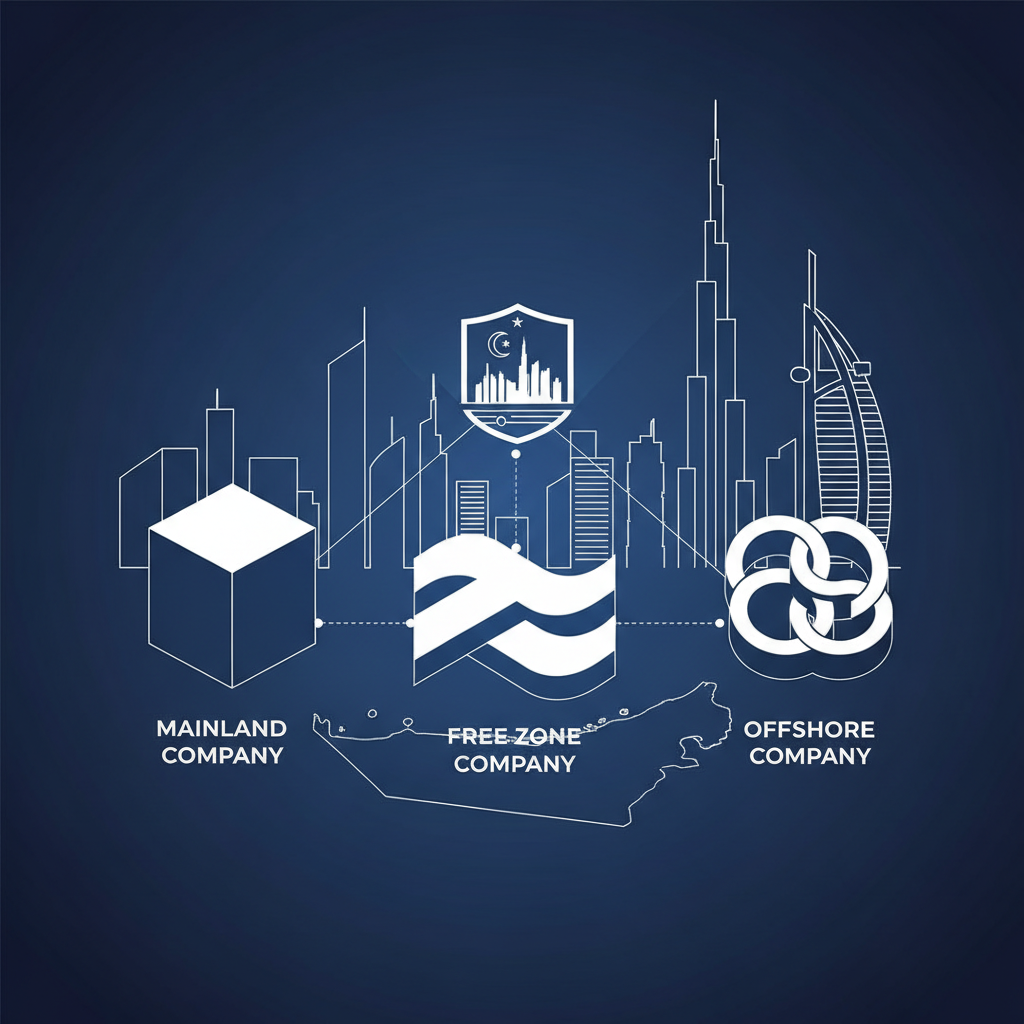
Dubai, a global business hub, continues to attract entrepreneurs and multinational corporations seeking strategic access to emerging markets, a tax-efficient environment, and world-class infrastructure. Establishing a business in this vibrant emirate requires a clear understanding of the various legal structures available, each with its own set of advantages, regulatory requirements, and operational considerations. Navigating these options is paramount for ensuring compliance, optimizing operational efficiency, and achieving long-term success.
Understanding Dubai's Business Jurisdictions
Dubai's company formation landscape is primarily divided into three main jurisdictions: Mainland, Free Zones, and Offshore. Each jurisdiction caters to different business objectives and offers distinct benefits and limitations.
Mainland Companies (Department of Economic Development - DED)
Mainland companies, registered with the Department of Economic Development (DED) in Dubai, are ideal for businesses that wish to trade directly with the local UAE market and conduct business anywhere within the UAE. They offer the most flexibility in terms of operational scope and location. Historically, mainland companies required a 51% local Emirati sponsorship, but recent legislative changes have significantly liberalized ownership rules, allowing 100% foreign ownership for many business activities. This reform, introduced through Federal Decree-Law No. 26 of 2020, has opened up numerous sectors previously restricted to foreign investors, making mainland formation even more attractive.
Key Characteristics:
- Local Market Access: Direct access to the entire UAE market without restrictions.
- Office Location: Can establish offices anywhere in Dubai.
- Ownership: Up to 100% foreign ownership for most commercial and industrial activities, subject to specific activity lists and regulatory approvals.
- Permits: Requires various permits and approvals from local government entities, including DED, municipality, and potentially other ministries depending on the business activity.
- Auditing: Mandatory annual auditing for most legal forms.
- Visa Quotas: Generally more flexible visa quotas compared to some free zones.
Common Legal Forms:
- Limited Liability Company (LLC): The most popular choice for mainland businesses due to its limited liability protection for shareholders and flexibility. Requires a minimum of two and a maximum of fifty shareholders.
- Sole Proprietorship: Suitable for single owners engaged in professional or commercial activities. The owner bears unlimited liability.
- Civil Company: For professionals (e.g., doctors, lawyers, consultants) with two or more partners. Liability is usually unlimited.
- Public Joint Stock Company (PJSC) / Private Joint Stock Company (PrJSC): For larger enterprises, with more stringent capital and regulatory requirements.
- Branch of a Foreign Company: Allows international companies to establish a presence in Dubai, conducting activities similar to the parent company.
Free Zone Companies
Dubai's numerous free zones are specially designated areas designed to promote specific industries and facilitate foreign investment by offering 100% foreign ownership, import/export duty exemptions, and a simplified regulatory environment. Each free zone has its own independent regulatory authority, rules, and specific business activities it caters to. Examples include Dubai International Financial Centre (DIFC) for financial services, Jebel Ali Free Zone (JAFZA) for logistics and trade, Dubai Internet City (DIC) for technology, and Dubai Multi Commodities Centre (DMCC) for commodities trade.
Key Characteristics:
- Ownership: 100% foreign ownership is permitted.
- Tax Benefits: 0% corporate and personal income tax (though corporate tax has been introduced in the UAE, free zones often retain preferential rates or exemptions for certain activities).
- Repatriation of Profits: 100% repatriation of capital and profits.
- Customs Duties: Exemptions from import and export duties within the free zone.
- Market Access: Primarily designed for international trade and business outside the UAE. Trading directly with the UAE mainland often requires a local distributor or agent, or establishing a branch of the free zone company on the mainland.
- Office Requirements: Generally requires a physical office space or flexi-desk arrangement within the free zone.
- Auditing: Mandatory annual auditing for most free zone entities.
Common Legal Forms:
- Free Zone Establishment (FZE): A single shareholder company.
- Free Zone Company (FZC): A company with two or more shareholders.
- Branch of a Foreign Company: Allows international companies to establish a branch within a free zone.
- Branch of a UAE Company: Allows mainland UAE companies to establish a branch in a free zone.
Offshore Companies
Dubai offshore companies, such as those registered in Jebel Ali Free Zone (JAFZA Offshore) or Ras Al Khaimah International Corporate Centre (RAK ICC), are typically used for international business, asset protection, and holding purposes. They are not permitted to conduct business within the UAE and do not require a physical office space. They are often chosen for their privacy, tax efficiency, and ease of administration for international transactions.
Key Characteristics:
- No Local Presence: Cannot conduct business within the UAE or rent physical office space.
- Tax Benefits: 0% corporate and personal income tax.
- Privacy: High degree of confidentiality for beneficial owners.
- Asset Protection: Often used for holding assets, intellectual property, or as a parent company for international subsidiaries.
- No Visa Eligibility: Does not grant residency visas.
- Auditing: Generally not mandatory for JAFZA Offshore, but RAK ICC may require financial statements.
Common Legal Forms:
- International Business Company (IBC): The standard legal form for offshore entities.
Choosing the Right Business Entity
The decision of which business entity to choose hinges on several critical factors:
- Business Activity: What kind of business will you conduct? Is it professional, commercial, industrial, or service-oriented?
- Target Market: Do you intend to serve the local UAE market, or are your operations primarily international?
- Ownership Structure: Do you require 100% foreign ownership, or are you open to local partnership?
- Budget and Cost: Initial setup costs, annual renewal fees, and operational expenses vary significantly across jurisdictions and entity types.
- Visa Requirements: Do you and your employees require UAE residency visas?
- Long-Term Goals: Consider scalability, potential for future expansion, and exit strategies.
For instance, a retail business aiming to sell directly to consumers across Dubai would typically opt for a mainland LLC. A technology startup focused on international clients might find a free zone like Dubai Internet City more suitable. An individual looking to hold international assets or intellectual property might consider an offshore company.
Registration Process and Key Considerations
The company formation process in Dubai, while streamlined, involves several steps, regardless of the chosen jurisdiction:
- Activity Definition: Clearly define your business activities, as this dictates the license type and jurisdiction.
- Name Reservation: Reserve a unique trade name that complies with UAE naming conventions.
- Legal Structure Selection: Choose the appropriate legal entity based on your business model.
- Initial Approvals: Obtain initial approval from the relevant authority (DED, Free Zone Authority).
- Documentation: Prepare and attest all required documents, including passports, business plans, and memorandum/articles of association.
- Office Space: Secure a physical office space (for mainland and free zone companies).
- License Issuance: Pay the required fees and obtain your trade license.
- Bank Account Opening: Open a corporate bank account.
- Visa Application: Apply for investor/employee visas (if applicable).
Costs and Timelines:
- Costs: Setup costs can range from AED 15,000 to AED 50,000+ (approximately USD 4,000 to USD 13,600+) for basic licenses, depending on the jurisdiction, legal form, activities, and office space. Annual renewal fees are also significant.
- Timelines: The process can take anywhere from a few days to several weeks, contingent on the complexity of the business activity, responsiveness in providing documents, and the specific authority involved. Free zones often boast quicker turnaround times for straightforward setups.
It is highly advisable to engage with a reputable business setup consultant. These professionals possess in-depth knowledge of local regulations, can assist with documentation, liaise with government authorities, and provide invaluable guidance to ensure a smooth and compliant setup process.
Regulatory Environment and Compliance
The UAE has a robust and evolving regulatory framework. Companies must adhere to various laws, including commercial company laws, labour laws, and more recently, corporate tax laws. The introduction of a federal corporate tax of 9% on taxable profits exceeding AED 375,000 (approximately USD 102,000) for financial years starting on or after June 1, 2023, is a significant development. While free zones may offer certain tax incentives, understanding the nuances of the new corporate tax regime is crucial for all businesses. Additionally, Anti-Money Laundering (AML) and Combating the Financing of Terrorism (CFT) regulations are strictly enforced, requiring businesses to maintain transparent records and conduct due diligence.
Conclusion
Dubai offers an unparalleled environment for business growth, but successful company formation hinges on a strategic choice of business entity. Whether it's the broad market access of a mainland LLC, the international focus and incentives of a free zone company, or the privacy and asset protection of an offshore structure, each option serves distinct entrepreneurial goals. Thorough research, an understanding of regulatory requirements, and professional guidance are indispensable for navigating Dubai's dynamic business landscape and laying a solid foundation for long-term prosperity in this global economic powerhouse.


