
Dubai (UAE) Company Formation: A Comprehensive Guide to Business Entities
Navigating the landscape of company formation in Dubai requires a deep understanding of the various business entities available. This article provides an exhaustive guide for entrepreneurs and professionals, detailing the types of companies, their regulatory frameworks, and key considerations for successful establishment in the UAE.
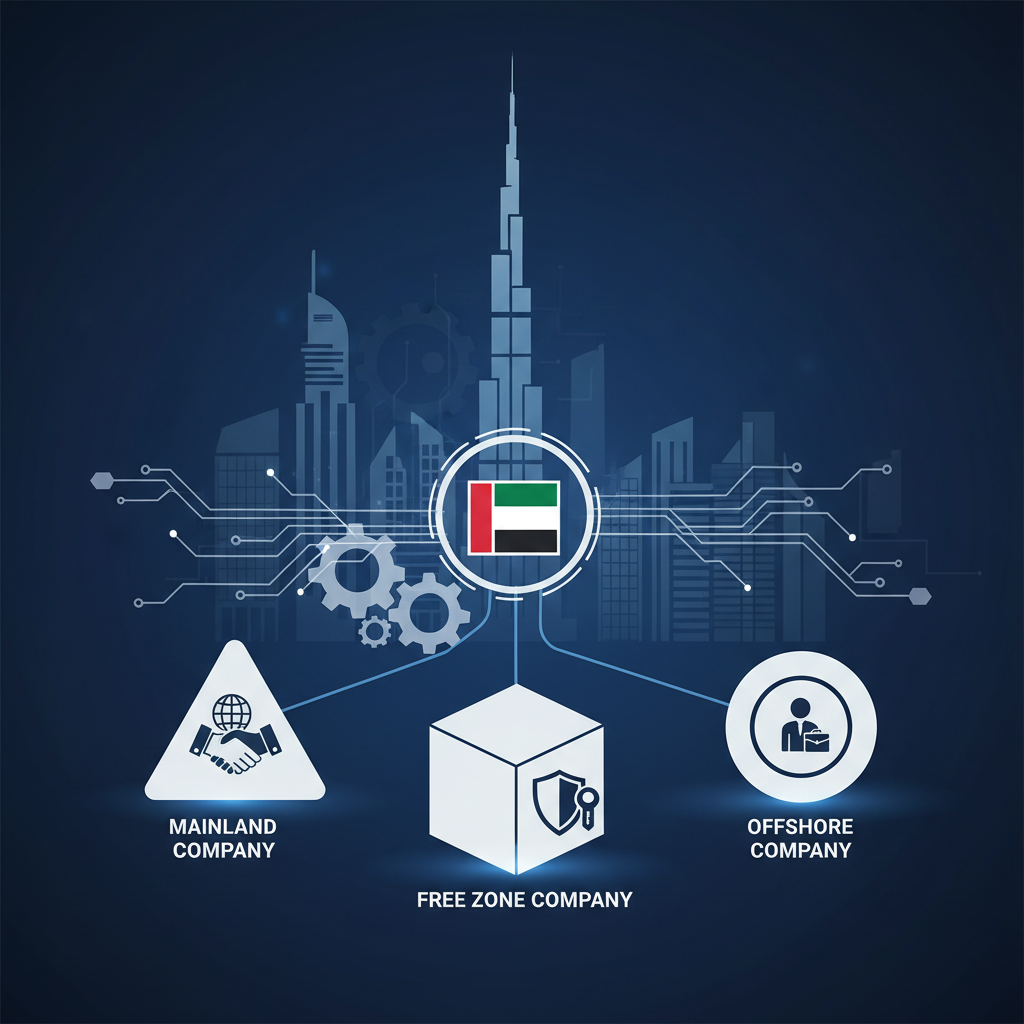
Dubai, a global hub for business and innovation, offers a dynamic environment for entrepreneurs and established corporations alike. Its strategic location, investor-friendly policies, and world-class infrastructure make it an attractive destination for company formation. However, successfully establishing a business in Dubai necessitates a thorough understanding of the various legal structures available, each with its own set of regulations, benefits, and limitations. This comprehensive guide aims to demystify the process, providing practical insights into the types of business entities in Dubai (UAE).
Understanding Dubai's Business Jurisdictions
Before delving into specific company types, it's crucial to understand Dubai's primary business jurisdictions: Mainland, Free Zones, and Offshore. Each offers distinct advantages and caters to different business objectives.
Dubai Mainland Companies
Mainland companies are licensed by the Department of Economic Development (DED) and are permitted to conduct business anywhere in the UAE, including within free zones, and internationally. Until recently, foreign ownership in mainland companies was generally capped at 49%, with a UAE national sponsor holding the remaining 51%. However, significant reforms introduced by the UAE Commercial Companies Law (CCL) in 2020 and subsequent amendments have largely removed the requirement for a local sponsor for many business activities, allowing 100% foreign ownership in a wide range of sectors. This change has dramatically enhanced Dubai's appeal for foreign investors. Mainland companies offer maximum flexibility in terms of business operations and access to the local market, making them ideal for businesses targeting the broader UAE consumer base or requiring physical office space outside free zones.
Dubai Free Zone Companies
Dubai boasts over 40 free zones, each designed to promote specific industries, such as media, healthcare, technology, and logistics. Free zones offer 100% foreign ownership, 100% repatriation of capital and profits, 100% exemption from corporate and personal income taxes (for a renewable period, typically 15-50 years), and customs duty exemptions. Companies established in free zones are primarily restricted to conducting business within their respective free zone or internationally. To trade directly with the mainland, a free zone company typically needs to partner with a local distributor or agent, or establish a separate mainland entity. The cost of setting up in a free zone can vary significantly depending on the chosen free zone and the type of license required. Popular free zones include Dubai International Financial Centre (DIFC), Dubai Multi Commodities Centre (DMCC), Jebel Ali Free Zone (JAFZA), and Dubai Internet City.
Dubai Offshore Companies
Offshore companies in Dubai are non-resident entities designed for international business activities. They are not permitted to conduct business within the UAE mainland or free zones and do not require a physical office space in Dubai. Offshore companies offer benefits such as 100% foreign ownership, tax exemption, and strong asset protection. They are commonly used for holding assets, international trading, and as special purpose vehicles. Jebel Ali Offshore Company (JAFZA Offshore) and RAK International Corporate Centre (RAK ICC) are the primary jurisdictions for offshore company formation in the UAE. These entities are not subject to the same strict reporting requirements as mainland or free zone companies, offering a higher degree of privacy, though increasing global transparency initiatives are impacting this.
Types of Business Entities in Dubai
Within these jurisdictions, several legal structures are available, each suited to different business models and investor preferences.
1. Limited Liability Company (LLC)
The LLC is the most common and versatile business entity in Dubai, particularly for mainland operations. It limits the liability of its shareholders to the extent of their capital contribution. With the recent amendments to the CCL, an LLC can now be 100% foreign-owned for many activities. An LLC can engage in a wide range of commercial, industrial, and professional activities. It requires a minimum of one shareholder and a maximum of 50. The process involves reserving a trade name, obtaining initial approval, drafting a Memorandum of Association (MOA), and securing various external approvals depending on the business activity.
2. Sole Proprietorship
A sole proprietorship is owned by a single individual who has unlimited liability for the company's debts and obligations. This structure is suitable for individuals who wish to operate a business under their own name or a trade name. While 100% foreign ownership is possible for professional activities, commercial and industrial sole proprietorships still typically require a UAE national service agent. This entity is simpler to establish but carries higher personal risk for the owner.
3. Civil Company
Civil companies are formed by professionals (e.g., doctors, lawyers, engineers, consultants) to practice their respective professions. These companies can be 100% foreign-owned, but for certain professions, a local service agent may still be required. The liability of partners in a civil company is generally unlimited. This structure is ideal for service-oriented businesses where the professional expertise of the partners is the primary asset.
4. Branch Office / Representative Office
Foreign companies can establish a branch office or a representative office in Dubai. A branch office is considered an extension of the parent company and can conduct activities similar to the parent company, including directly engaging in commercial activities. It must have the same name as the parent company. A representative office, on the other hand, is limited to marketing and promotional activities for the parent company and cannot engage in direct sales or commercial transactions. Both structures require a local service agent (UAE national) and are 100% foreign-owned. They are suitable for foreign companies looking to establish a presence in Dubai without forming a separate legal entity.
5. Free Zone Establishment (FZE) / Free Zone Company (FZCO)
These are the most common structures within free zones. An FZE is a single-shareholder entity, while an FZCO has two or more shareholders. Both offer 100% foreign ownership, full repatriation of profits, and tax exemptions. The specific requirements and costs vary significantly between free zones, but generally involve submitting a business plan, shareholder documents, and obtaining a relevant trade license. These entities are ideal for businesses focused on international trade, specific industries, or those seeking a tax-efficient environment.
6. Public Shareholding Company (PJSC) / Private Shareholding Company (PSJC)
These are typically larger corporate structures. A Public Joint Stock Company (PJSC) is suitable for large enterprises that intend to offer shares to the public, requiring a minimum capital and a minimum of 5 founders. A Private Joint Stock Company (PSJC) is similar but shares are not offered to the public, and it requires a minimum of 2 founders. These entities are more complex to establish and are subject to stringent regulatory oversight by the Securities and Commodities Authority (SCA).
Key Considerations for Company Formation
Choosing the right business entity involves several critical factors:
- Business Activity: The nature of your business operations will dictate eligible legal structures and jurisdictions. Certain activities are restricted to specific free zones or require special approvals.
- Ownership Structure: Determine whether 100% foreign ownership is a priority. If so, free zones or certain mainland activities under the new CCL are viable options.
- Market Access: Decide whether you need to operate directly in the UAE mainland market or if international operations suffice.
- Capital Requirements: Minimum capital requirements vary significantly by entity type and jurisdiction. While many free zones have low or no minimum capital, mainland LLCs historically had higher requirements, though these have become more flexible.
- Cost and Timeline: Setup costs include license fees, registration fees, office rent (if applicable), and professional service fees. Timelines can range from a few days for simple free zone setups to several weeks or months for complex mainland entities requiring multiple approvals.
- Regulatory Compliance: Understand the ongoing compliance obligations, including annual license renewals, audit requirements, and tax regulations (e.g., VAT, and upcoming corporate tax).
Conclusion
Dubai offers a diverse and evolving landscape for company formation, catering to a wide array of business needs and investment strategies. The recent amendments allowing 100% foreign ownership in many mainland sectors have further solidified its position as a top global business destination. Whether opting for the broad market access of a mainland LLC, the tax efficiencies and specialized environment of a free zone entity, or the international focus of an offshore company, a thorough understanding of each structure's nuances is paramount. Engaging with experienced business consultants and legal advisors is highly recommended to navigate the regulatory complexities, ensure compliance, and make an informed decision that aligns with your long-term business objectives. Careful planning and due diligence are the cornerstones of successful company formation and sustainable growth in the vibrant economy of Dubai.


