Navigating Data Protection and Privacy Law Compliance in the United States
Understanding and complying with the complex landscape of data protection and privacy laws in the United States is paramount for businesses operating today. This article provides a comprehensive guide for entrepreneurs and business professionals, detailing key regulations, compliance strategies, and the implications of non-compliance.
Navigating Data Protection and Privacy Law Compliance in the United States
In an increasingly digital world, data has become an invaluable asset, driving innovation, marketing, and business intelligence. However, with the proliferation of data collection and processing comes a heightened responsibility for businesses to protect this information. In the United States, the landscape of data protection and privacy law is multifaceted, characterized by a patchwork of federal and state-specific regulations rather than a single, overarching framework like Europe's GDPR. For entrepreneurs and business professionals, navigating this intricate web is not merely a legal obligation but a critical component of maintaining customer trust, brand reputation, and operational integrity. Non-compliance can lead to severe financial penalties, reputational damage, and legal challenges.
The Fragmented US Privacy Landscape: Key Federal and State Laws
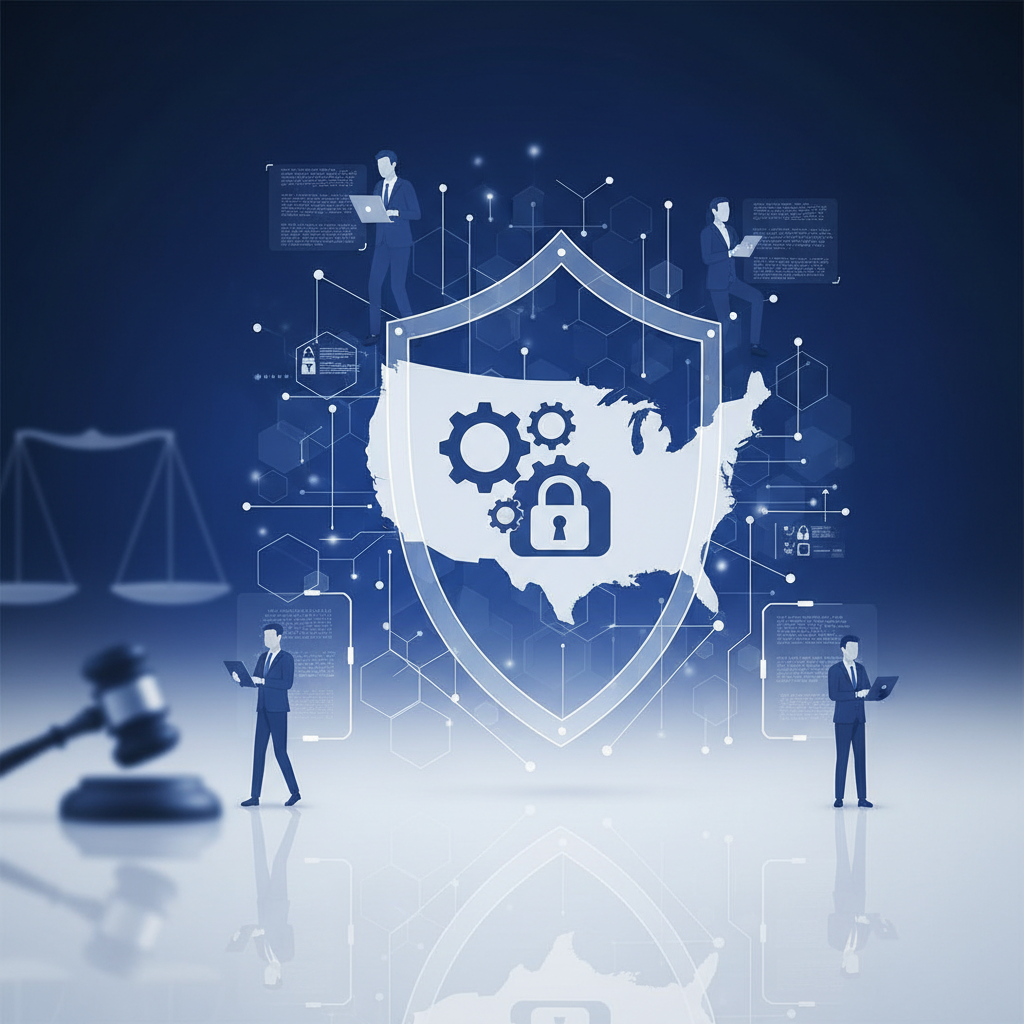
Unlike many other jurisdictions, the U.S. does not have a single, comprehensive federal data privacy law covering all sectors and types of data. Instead, its regulatory environment is sector-specific and augmented by robust state-level initiatives. This fragmentation necessitates a thorough understanding of which laws apply to a given business based on its industry, the type of data it handles, and the geographical locations of its customers.
Federal Regulations
Several key federal laws govern specific types of data or industries:
- HIPAA (Health Insurance Portability and Accountability Act): This law establishes national standards to protect sensitive patient health information from being disclosed without the patient's consent or knowledge. It applies to healthcare providers, health plans, healthcare clearinghouses, and their business associates. Compliance involves stringent security measures, privacy policies, and breach notification protocols.
- COPPA (Children's Online Privacy Protection Act): COPPA imposes certain requirements on operators of websites or online services directed to children under 13 years of age, or on operators of other websites or online services that have actual knowledge that they are collecting personal information online from a child under 13. It mandates parental consent for data collection and provides parents with control over their children's online information.
- GLBA (Gramm-Leach-Bliley Act): This act applies to financial institutions and requires them to explain their information-sharing practices to their customers and to safeguard sensitive data. It includes the Privacy Rule, Safeguards Rule, and Pretexting Protection.
- CAN-SPAM Act: While not a privacy law in the traditional sense, the CAN-SPAM Act establishes requirements for commercial messages, gives recipients the right to have emails stopped from being sent to them, and spells out tough penalties for violations.
State-Level Privacy Laws
In recent years, several states have taken the lead in enacting comprehensive privacy legislation, significantly impacting how businesses collect, process, and share personal data. These state laws often grant consumers more robust rights over their personal information.
- CCPA/CPRA (California Consumer Privacy Act/California Privacy Rights Act): The CCPA, effective January 1, 2020, and subsequently amended by the CPRA, is arguably the most influential state privacy law. It grants California consumers rights such as the right to know what personal information is collected about them, the right to delete personal information, the right to opt-out of the sale or sharing of personal information, and the right to correct inaccurate personal information. The CPRA further expanded these rights and established the California Privacy Protection Agency (CPPA) to enforce the law. Businesses that meet specific thresholds (e.g., annual gross revenues over $25 million, processing personal information of 100,000 or more California consumers/households) must comply.
- Virginia CDPA (Virginia Consumer Data Protection Act): Effective January 1, 2023, the CDPA grants similar consumer rights to the CCPA, including rights to access, delete, and opt-out of the processing of personal data for targeted advertising, sale, or profiling. It applies to businesses that conduct business in Virginia or produce products or services targeted to Virginia residents and meet specific processing thresholds.
- Colorado CPA (Colorado Privacy Act): Also effective July 1, 2023, the CPA provides Colorado consumers with rights akin to those in California and Virginia, focusing on transparency, control, and accountability for data controllers.
- Utah UCPA (Utah Consumer Privacy Act): Effective December 31, 2023, the UCPA is generally considered more business-friendly than its counterparts, with fewer opt-out rights and a higher threshold for applicability.
- Connecticut CTDPA (Connecticut Data Privacy Act): Effective July 1, 2023, the CTDPA closely aligns with the CDPA and CPA, offering similar consumer rights and business obligations.
This trend of state-level privacy laws is expected to continue, creating a complex compliance challenge for businesses operating across state lines.
Practical Steps for Data Privacy Compliance
Achieving and maintaining data privacy compliance requires a proactive and systematic approach. Businesses should consider the following practical steps:
1. Data Inventory and Mapping
The first crucial step is to understand what personal data your organization collects, where it is stored, how it is used, with whom it is shared, and for how long it is retained. This involves creating a comprehensive data inventory and mapping data flows throughout your organization. This exercise helps identify data assets, assess risks, and determine which privacy laws apply.
2. Privacy Policy and Notice
Develop and prominently display clear, concise, and easily accessible privacy policies that inform consumers about your data collection, use, sharing, and retention practices. These policies must be updated regularly to reflect changes in practices or applicable laws. For CCPA/CPRA, specific disclosures are required, including a "Do Not Sell or Share My Personal Information" link.
3. Implement Data Subject Rights Mechanisms
Establish robust procedures and systems to handle consumer requests regarding their data rights (e.g., access, deletion, correction, opt-out). This includes verifying the identity of the requester and responding within the legally mandated timeframes (e.g., 45 days under CCPA/CPRA, with a possible 45-day extension).
4. Data Security Measures
Implement appropriate technical and organizational security measures to protect personal data from unauthorized access, disclosure, alteration, or destruction. This includes encryption, access controls, regular security audits, employee training, and incident response plans. Many privacy laws, while not prescriptive about specific security technologies, require "reasonable" security measures.
5. Vendor Management
If you share personal data with third-party vendors or service providers, ensure that contractual agreements include data protection clauses that obligate them to comply with applicable privacy laws and maintain adequate security. Conduct due diligence on vendors' privacy and security practices.
6. Employee Training
Regularly train employees on data privacy best practices, company policies, and their responsibilities regarding handling personal data. Human error is a significant cause of data breaches, making ongoing training essential.
7. Breach Notification Protocol
Develop and regularly test a data breach response plan. Most federal and state laws require businesses to notify affected individuals and, in some cases, regulatory bodies, within specific timeframes following a data breach.
Costs and Timelines of Compliance
The costs associated with data privacy compliance can vary significantly based on the size and complexity of the business, the volume and sensitivity of data processed, and the number of applicable regulations. These costs can include:
- Legal Consultation: Engaging privacy attorneys to interpret laws, draft policies, and advise on compliance strategies.
- Technology Solutions: Investing in data mapping tools, consent management platforms, data security software, and identity verification systems.
- Personnel: Hiring or training data privacy officers, privacy engineers, or dedicated compliance staff.
- Audits and Assessments: Conducting regular privacy impact assessments (PIAs) and security audits.
Timelines for achieving compliance can range from a few months for smaller, less complex businesses to over a year for large enterprises with extensive data operations. The initial setup is often the most time-consuming, but ongoing monitoring, updates, and training are continuous processes.
The Implications of Non-Compliance
The consequences of failing to comply with data protection and privacy laws are severe and multifaceted:
- Financial Penalties: Fines can be substantial. For instance, CCPA/CPRA violations can incur civil penalties of up to $2,500 per violation and $7,500 per intentional violation. GDPR, which influences global privacy standards, can levy fines up to 4% of annual global turnover or €20 million, whichever is greater. While the U.S. doesn't have a single equivalent, state-level fines can quickly accumulate.
- Reputational Damage: Data breaches and privacy violations erode customer trust, damage brand reputation, and can lead to a significant loss of business.
- Legal Action: Businesses may face class-action lawsuits from affected individuals, regulatory enforcement actions, and investigations by state attorneys general or federal agencies like the FTC.
- Operational Disruption: Remediation efforts after a breach or enforcement action can divert significant resources, disrupt operations, and impact business continuity.
Conclusion
Data protection and privacy law compliance in the United States is an evolving and complex challenge for businesses. The fragmented regulatory environment, characterized by a mix of federal and increasingly robust state-specific laws, demands a proactive, comprehensive, and adaptable approach. By understanding the applicable regulations, implementing robust data governance practices, prioritizing data security, and fostering a culture of privacy within the organization, businesses can not only mitigate legal and financial risks but also build stronger relationships with their customers based on trust and transparency. Investing in privacy compliance is no longer optional; it is a fundamental pillar of sustainable business success in the digital age.