Navigating Import and Export Licensing in the United States: A Practical Guide for Businesses
This comprehensive guide demystifies the complex world of import and export licensing in the United States, offering practical insights for businesses. Learn about key regulations, required permits, compliance strategies, and how to navigate the various government agencies involved to ensure smooth international trade operations.
Navigating Import and Export Licensing in the United States: A Practical Guide for Businesses
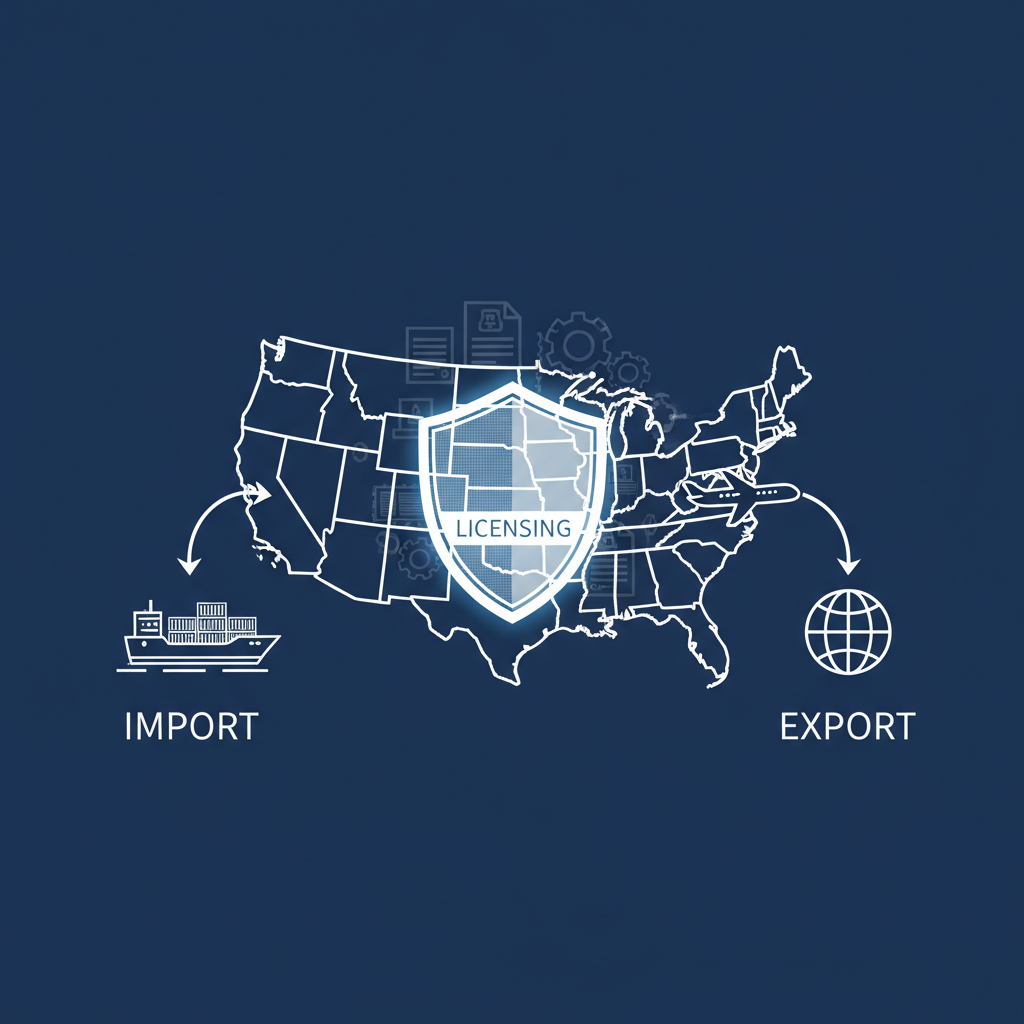
Engaging in international trade, whether importing goods into the United States or exporting them to foreign markets, presents significant opportunities for business growth. However, success in this arena hinges on a thorough understanding and strict adherence to a myriad of complex regulations, particularly those pertaining to import and export licensing. Failure to comply can result in substantial fines, seizure of goods, and even criminal penalties. This guide provides a practical overview for entrepreneurs and business professionals seeking to navigate the intricate landscape of U.S. import and export controls.
Understanding the Regulatory Framework
The United States employs a multi-agency approach to regulate international trade, with different government bodies overseeing specific types of goods, technologies, and destinations. The primary agencies involved are the U.S. Customs and Border Protection (CBP), the Bureau of Industry and Security (BIS) within the Department of Commerce, the Directorate of Defense Trade Controls (DDTC) within the Department of State, and the Office of Foreign Assets Control (OFAC) within the Department of the Treasury.
U.S. Customs and Border Protection (CBP)
CBP is the frontline agency responsible for enforcing import laws and regulations. While most commercial imports do not require a specific import license in the traditional sense, all imported goods must clear customs and comply with various agency requirements. For instance, certain products like food, drugs, cosmetics, medical devices (regulated by the Food and Drug Administration - FDA), firearms (regulated by the Bureau of Alcohol, Tobacco, Firearms and Explosives - ATF), and agricultural products (regulated by the U.S. Department of Agriculture - USDA) require specific permits, certifications, or clearances from their respective agencies before they can be imported. Importers must also ensure proper classification of goods using the Harmonized Tariff Schedule (HTS) codes, determine the correct valuation, and pay applicable duties and taxes. A Customs Bond is generally required for commercial imports valued over $2,500 to guarantee payment of duties and compliance with import laws.
Bureau of Industry and Security (BIS)
BIS, under the Department of Commerce, regulates the export and re-export of most commercial and dual-use items (items with both commercial and potential military applications) under the Export Administration Regulations (EAR). The EAR employs the Commerce Control List (CCL), which categorizes items based on their Export Control Classification Number (ECCN). An ECCN is a five-character alphanumeric designation that identifies items for export control purposes. Determining the correct ECCN is crucial for identifying whether an export license is required. Most exports fall under an EAR99 designation, meaning they are subject to the EAR but not listed on the CCL, and generally do not require a license unless destined for an embargoed country, an end-user of concern, or for a prohibited end-use. However, items with specific ECCNs may require a license depending on the destination country, the end-user, and the end-use. BIS also maintains various license exceptions that can permit exports without a specific license, provided certain conditions are met.
Directorate of Defense Trade Controls (DDTC)
DDTC, within the Department of State, controls the export and temporary import of defense articles and defense services, as well as related technical data, under the International Traffic in Arms Regulations (ITAR). Items subject to ITAR are listed on the U.S. Munitions List (USML). If an item is on the USML, it almost certainly requires a license for export, regardless of destination, unless a specific exemption applies. Registration with DDTC is a prerequisite for any entity involved in manufacturing, exporting, or brokering defense articles or services. The licensing process for ITAR-controlled items is generally more stringent and time-consuming than for EAR-controlled items.
Office of Foreign Assets Control (OFAC)
OFAC, part of the Department of the Treasury, administers and enforces economic and trade sanctions based on U.S. foreign policy and national security goals. These sanctions target specific countries, individuals, entities, and activities. OFAC regulations prohibit U.S. persons from engaging in transactions with sanctioned parties or countries without specific authorization (a license) from OFAC. This applies to both imports and exports, as well as financial transactions. Businesses must rigorously screen all parties involved in international transactions against OFAC's Specially Designated Nationals and Blocked Persons (SDN) List and other sanctions lists to avoid severe penalties.
Practical Steps for Compliance
Navigating these regulations requires a systematic approach. Here are key practical steps:
1. Product Classification and Determination
For imports, accurately classify your goods using the Harmonized Tariff Schedule (HTS) codes. This determines applicable duties and any specific agency requirements. For exports, determine the Export Control Classification Number (ECCN) for your items under the EAR, or ascertain if they fall under the USML for ITAR. This step is foundational; incorrect classification is a common source of compliance issues. Businesses can seek assistance from customs brokers, trade consultants, or request binding rulings from CBP or BIS.
2. Destination and End-User Screening
Before any international transaction, screen all parties involved – including the ultimate consignee, intermediate consignees, purchasers, and end-users – against various government watch lists. This includes OFAC's SDN List, BIS's Denied Persons List, Entity List, and Unverified List, and DDTC's AECA Debarred List. Many software solutions are available to automate this screening process. Additionally, understand the specific import requirements of the destination country for exports.
3. License Determination and Application
Based on product classification, destination, end-user, and end-use, determine if a specific import or export license is required. If so, prepare and submit the necessary application to the relevant agency (e.g., BIS for an export license, DDTC for an ITAR license, or other agencies for import permits). Applications require detailed information about the goods, parties involved, and the transaction's purpose. Timelines for license approvals can vary significantly, from weeks to several months, depending on the complexity and sensitivity of the transaction.
4. Recordkeeping and Internal Controls
Maintain meticulous records of all import and export transactions for a minimum of five years. This includes commercial invoices, packing lists, bills of lading, air waybills, certificates of origin, license applications, approved licenses, screening results, and any communications related to the transaction. Implement robust internal compliance programs, including written policies and procedures, employee training, and regular audits, to ensure ongoing adherence to regulations. This demonstrates due diligence and can mitigate penalties in case of inadvertent violations.
Costs and Timelines
The costs associated with import and export licensing can vary widely. For imports, these include duties, taxes, customs broker fees, and potentially fees for specific permits (e.g., FDA registration fees). For exports, while BIS export licenses generally do not have an application fee, DDTC registration and ITAR license applications do incur fees (e.g., annual DDTC registration fees can range from approximately $2,750 to over $3,000, depending on the applicant's activities). Professional services for classification, screening software, and legal advice also contribute to overall compliance costs.
Timelines are equally variable. Simple import clearances might take a few days, while complex ones requiring multiple agency approvals could take weeks. BIS export license applications typically take 30-60 days for processing, but can extend longer for sensitive items or destinations. ITAR license applications often take 60-90 days or more, especially if interagency review is required.
Conclusion
Successfully navigating import and export licensing in the United States is a critical component of international business. It requires a proactive, diligent, and well-informed approach. Businesses must invest in understanding the complex regulatory landscape, accurately classifying their goods, thoroughly screening all transaction parties, and maintaining comprehensive records. While the process can seem daunting, adherence to these regulations protects businesses from severe penalties and facilitates smooth, compliant international trade. Engaging with experienced customs brokers, trade attorneys, and consultants can provide invaluable assistance in establishing and maintaining a robust compliance program, ultimately enabling businesses to confidently expand their global footprint.