
Navigating the Nordic Landscape: A Comprehensive Guide to Company Registration in Denmark
Denmark, consistently ranked among the easiest places to do business, offers a streamlined process for company registration. This guide provides a detailed overview for entrepreneurs looking to establish a presence in this dynamic Nordic economy, covering everything from choosing the right legal structure to fulfilling post-registration obligations.
Navigating the Nordic Landscape: A Comprehensive Guide to Company Registration in Denmark
Denmark has long been recognized as a highly attractive destination for businesses, lauded for its stable economy, transparent regulatory environment, and innovative spirit. Its strategic location, skilled workforce, and robust digital infrastructure make it an ideal launchpad for both startups and established international enterprises. For those contemplating establishing a business presence in this Nordic nation, understanding the company registration process is paramount. This comprehensive guide aims to demystify the steps involved, providing a clear roadmap for successful incorporation.
1. Choosing the Right Legal Structure
The foundational step in registering a company in Denmark is selecting the appropriate legal form. This decision carries significant implications for liability, taxation, administrative burden, and capital requirements. Denmark offers several common business structures, each suited to different operational scales and ownership models.
1.1 Private Limited Company (ApS - Anpartsselskab)
The ApS is the most popular choice for small and medium-sized enterprises (SMEs) due to its limited liability protection for shareholders. It requires a minimum share capital of DKK 40,000 (approximately EUR 5,300), which can be paid in cash or assets. An ApS must have at least one shareholder and one director. This structure offers a good balance between flexibility and security, making it suitable for a wide range of businesses.
1.2 Public Limited Company (A/S - Aktieselskab)
An A/S is designed for larger businesses and those intending to raise capital from the public. It demands a significantly higher minimum share capital of DKK 400,000 (approximately EUR 53,000). While also offering limited liability, an A/S has more stringent regulatory requirements, including the need for a board of directors and a supervisory board. This structure is typically chosen by companies planning significant growth or stock market listing.
1.3 Sole Proprietorship (Enkeltmandsvirksomhed)
For individual entrepreneurs, the sole proprietorship is the simplest and least costly option. There is no minimum capital requirement, and the owner is personally liable for all business debts. This structure is ideal for freelancers, consultants, and small businesses where the owner is the primary operator and willing to bear full personal risk.
1.4 Branch Office (Filial)
Foreign companies wishing to establish a presence in Denmark without forming a new legal entity can opt for a branch office. A branch is not a separate legal entity from its parent company; thus, the parent company bears full liability for the branch's operations. This option is often chosen by international businesses looking to test the Danish market or conduct specific activities without full incorporation.
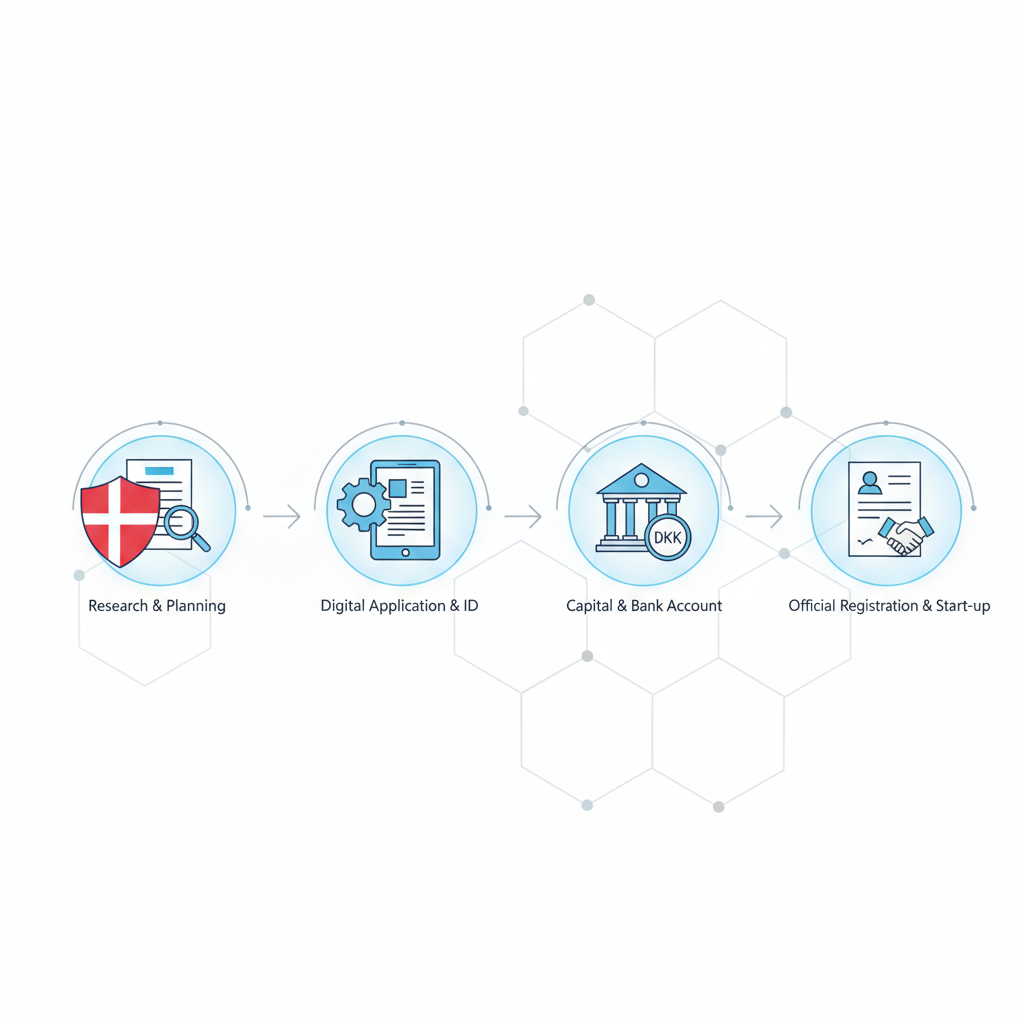
2. The Registration Process: Step-by-Step
Once the legal structure is determined, the actual registration process can commence. Denmark's business registration is primarily handled by the Danish Business Authority (Erhvervsstyrelsen) through its online portal, Virk.dk.
2.1 Obtaining a Digital Signature (NemID/MitID)
For Danish residents and citizens, a NemID (soon to be replaced by MitID) is essential for accessing Virk.dk and signing documents digitally. Foreign individuals without a Danish civil registration number (CPR) may need to rely on professional assistance or acquire a special digital signature for businesses (NemID for employees or MitID Erhverv) if they are to manage the company themselves directly.
2.2 Company Name Reservation and Articles of Association
Before formal registration, it is advisable to check the availability of your desired company name through the Danish Business Authority's search function on Virk.dk. For an ApS or A/S, drafting the Articles of Association is a critical step. These articles must comply with Danish company law and outline key details such as the company name, registered office, share capital, purpose, and rules for general meetings.
2.3 Capital Deposit and Registration on Virk.dk
For capital companies (ApS, A/S), the minimum share capital must be deposited into a Danish bank account. The bank will issue a confirmation that is required for registration. The registration itself is performed online via Virk.dk. This involves completing a digital form, uploading necessary documentation (e.g., Articles of Association, capital confirmation), and paying the registration fee. The Danish Business Authority typically processes applications within a few days, after which the company receives its Central Business Register (CVR) number, which serves as its unique identification number.
3. Post-Registration Obligations and Compliance
Receiving the CVR number marks the official establishment of your company, but the journey doesn't end there. Several post-registration obligations must be met to ensure ongoing compliance with Danish law.
3.1 Tax Registration and VAT
Upon registration, the company is automatically registered with the Danish tax authorities (Skattestyrelsen). Most businesses in Denmark are required to register for VAT (Moms) if their annual taxable turnover exceeds DKK 50,000. This registration is also done via Virk.dk. Companies must then submit regular VAT returns and pay applicable VAT.
3.2 Bank Account and Insurance
Opening a dedicated Danish business bank account is crucial for managing finances and is often a prerequisite for depositing share capital. Furthermore, depending on the nature of the business, various insurances may be mandatory or highly recommended, such as liability insurance, workers' compensation insurance, and property insurance.
3.3 Accounting and Annual Reporting
Danish companies are subject to strict accounting and reporting standards. All companies must maintain proper accounting records in accordance with the Danish Bookkeeping Act. ApS and A/S companies are required to submit annual financial statements to the Danish Business Authority. These statements must be audited by a state-authorized public accountant (statsautoriseret revisor) for larger companies or under specific circumstances.
4. Key Considerations for Foreign Investors
Denmark actively welcomes foreign investment, offering a supportive environment for international entrepreneurs. However, foreign investors should be aware of specific considerations.
4.1 Residency and Management
While there are no general residency requirements for shareholders of Danish companies, at least 50% of the board of directors (or the sole director for an ApS) must be residents of an EU/EEA country or Switzerland, or hold a special permit from the Danish Business Authority. This ensures a degree of local oversight and accountability.
4.2 Professional Assistance
Given the legal and administrative complexities, especially for those unfamiliar with Danish regulations or without a NemID/MitID, engaging professional assistance is highly recommended. Lawyers specializing in corporate law, accountants, and company formation agencies can provide invaluable guidance, ensuring compliance and a smooth registration process. They can assist with drafting Articles of Association, managing capital deposits, and handling the online registration on Virk.dk.
Conclusion
Registering a company in Denmark is a relatively straightforward process, largely facilitated by its efficient digital infrastructure and transparent regulatory framework. By carefully selecting the appropriate legal structure, diligently following the online registration steps, and fulfilling all post-registration obligations, entrepreneurs can successfully establish their business in this thriving Nordic economy. While the process is designed to be accessible, understanding the nuances of Danish corporate law and leveraging professional expertise can significantly streamline the journey, allowing businesses to focus on growth and innovation in one of Europe's most dynamic markets. Denmark's commitment to ease of doing business makes it an attractive proposition for both domestic and international ventures, promising a stable and supportive environment for long-term success.


