Opening a Corporate Bank Account in Dubai (UAE): A Comprehensive Step-by-Step Guide for Businesses
Navigating the process of opening a corporate bank account in Dubai can be complex but is crucial for any business operating in the UAE. This guide provides a detailed, step-by-step overview, covering regulations, required documents, and practical tips to ensure a smooth and successful application.
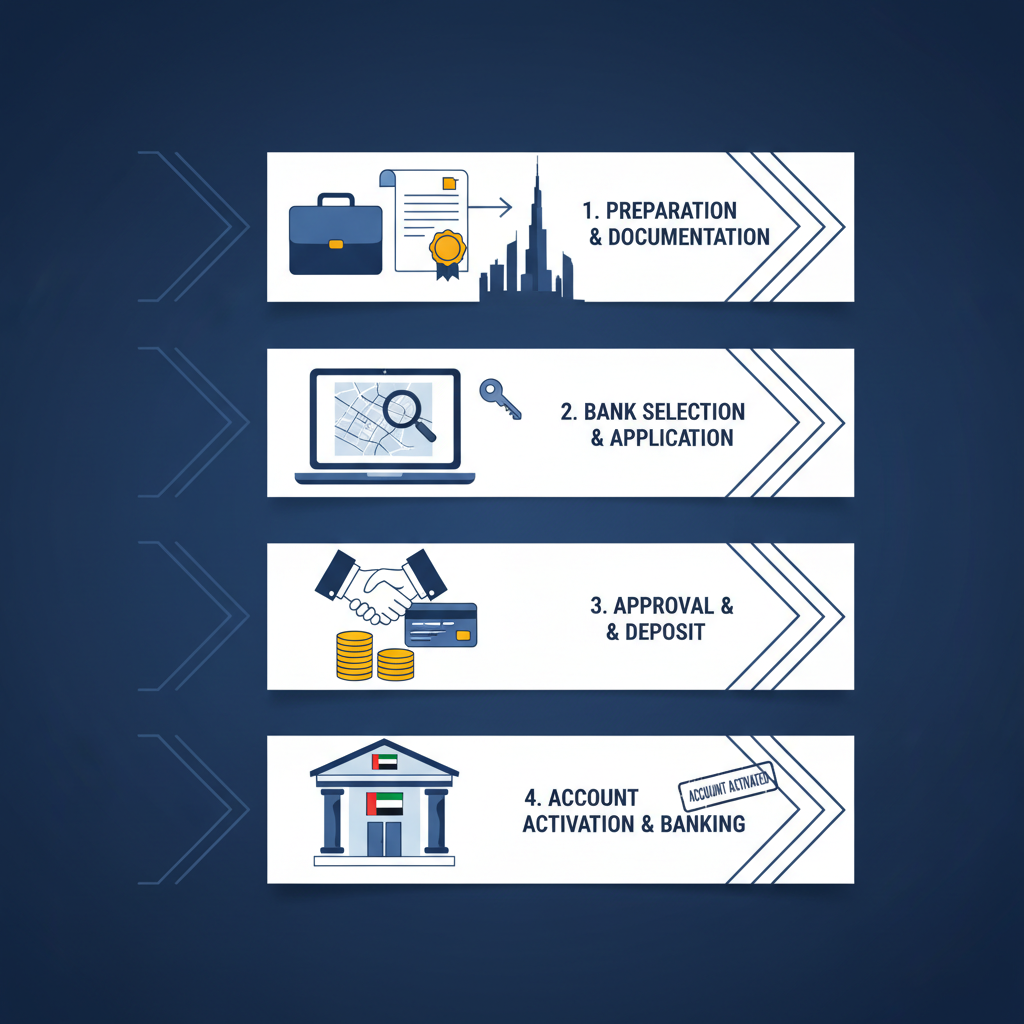
Opening a Corporate Bank Account in Dubai (UAE): A Comprehensive Step-by-Step Guide for Businesses
Dubai, a global hub for trade, finance, and innovation, attracts entrepreneurs and businesses worldwide. Establishing a corporate presence in this dynamic emirate necessitates a fundamental step: opening a corporate bank account. This is not merely a procedural formality but a critical component for managing finances, facilitating transactions, and ensuring compliance with local and international regulations. While the UAE's banking sector is robust and sophisticated, the process of opening a corporate account can be perceived as challenging due to stringent anti-money laundering (AML) and know-your-customer (KYC) requirements. This comprehensive guide aims to demystify the process, offering practical insights and a step-by-step approach for businesses looking to establish their financial footing in Dubai.
Understanding the Regulatory Landscape and Banking Environment
The UAE's financial sector is primarily regulated by the Central Bank of the UAE, which sets stringent guidelines for all financial institutions. These regulations are designed to maintain financial stability, combat financial crime, and protect consumer interests. For corporate bank accounts, the focus is heavily on transparency and due diligence. Banks in Dubai operate under strict AML and KYC frameworks, requiring extensive documentation and a thorough understanding of the business's activities, ownership structure, and source of funds. This rigorous approach, while sometimes time-consuming, underscores Dubai's commitment to being a clean and reputable financial jurisdiction.
Key Considerations Before Application
Before approaching a bank, businesses should consider several factors that influence the account opening process:
- Business Activity and Risk Profile: Banks assess the nature of your business. Certain industries, particularly those deemed high-risk (e.g., cryptocurrency, precious metals, or certain trading activities), may face additional scrutiny or limited banking options.
- Company Structure: The legal structure of your company (e.g., Free Zone company, Mainland company, offshore entity) dictates the specific documents required and may influence bank preferences.
- Shareholder and Director Residency: While not always a strict requirement, having resident shareholders or directors can sometimes streamline the process as it simplifies KYC checks.
- Minimum Balance Requirements: Many banks in Dubai impose minimum average monthly balance requirements for corporate accounts. Failing to maintain these balances can incur significant fees. These can range from AED 25,000 to AED 500,000 or more, depending on the bank and account type.
- Transaction Volume and Type: Banks will want to understand your expected transaction volume and the nature of your financial activities to ensure the account aligns with their offerings.
- Bank Selection: Dubai offers a wide array of local and international banks. Researching their corporate offerings, fees, online banking capabilities, and industry-specific expertise is crucial. Popular choices include Emirates NBD, Mashreq Bank, Commercial Bank of Dubai (CBD), HSBC, Standard Chartered, and FAB (First Abu Dhabi Bank).
Step-by-Step Guide to Opening a Corporate Bank Account
The process, while varying slightly between banks, generally follows these steps:
Step 1: Initial Research and Bank Selection
As highlighted above, this is a critical first step. Evaluate banks based on their reputation, corporate banking services, fee structure, minimum balance requirements, and their understanding of your industry. Consider whether you need multi-currency accounts, trade finance facilities, or specific online banking features. It's often advisable to contact a few banks directly or through a business consultant to get a preliminary understanding of their requirements and suitability.
Step 2: Prepare Required Documentation
This is arguably the most intensive part of the process. Banks in Dubai require a comprehensive set of documents to comply with KYC and AML regulations. While the exact list can vary, common requirements include:
- Company Documents:
- Trade License (issued by the relevant authority, e.g., DED for Mainland, Free Zone Authority for Free Zones).
- Certificate of Incorporation/Establishment.
- Memorandum and Articles of Association (MOA/AOA).
- Share Certificate(s).
- Board Resolution authorising the opening of the bank account and specifying the authorised signatories.
- Tenancy Contract/Lease Agreement for the office premises.
- Company stamp.
- Shareholder and Director Documents:
- Passport copies (with UAE entry stamp/visa page).
- Emirates ID (if resident).
- Proof of residential address (utility bill, bank statement from home country).
- CV/Resume outlining professional background.
- Bank statements (personal and/or corporate from home country, typically for the last 6-12 months) to demonstrate source of funds and financial standing.
- Source of wealth declaration.
- Business-Related Documents:
- Detailed Business Plan outlining activities, target market, financial projections, and operational structure.
- Supplier and client contracts/agreements (if available) to demonstrate legitimate business operations.
- Company profile/brochure.
- Website details (if applicable).
All non-English documents must be officially translated into Arabic or English by a sworn translator. Documents originating outside the UAE often require attestation by the UAE Embassy in the country of origin and the Ministry of Foreign Affairs and International Cooperation (MOFAIC) in the UAE.
Step 3: Application Submission and Interview
Once all documents are prepared, you will submit the application form along with the supporting papers. Most banks require a face-to-face meeting with the authorised signatories and, in some cases, all shareholders. This interview is crucial for the bank to understand your business model, verify information, and assess the risk profile. Be prepared to articulate your business activities, financial projections, and the purpose of the bank account clearly and concisely.
Step 4: Due Diligence and Approval Process
Following the interview, the bank's compliance department will conduct thorough due diligence. This involves verifying all submitted documents, conducting background checks on shareholders and directors, and assessing the overall risk associated with your business. This stage can take anywhere from a few weeks to several months, depending on the complexity of your company structure, the completeness of your documentation, and the bank's internal processes. Proactive communication and prompt responses to any additional requests from the bank can help expedite this phase.
Step 5: Account Activation and Initial Deposit
Upon successful completion of the due diligence and approval, the bank will notify you of the account activation. You will then typically be required to make an initial deposit to activate the account. This amount can vary significantly between banks and account types. Once activated, you will receive your account details, debit cards, cheque books, and access to online banking facilities.
Costs and Timelines
Costs:
- Bank Fees: Monthly account maintenance fees, transaction fees, international transfer fees, and charges for falling below the minimum balance. These can range from a few hundred AED to thousands, depending on the bank and account type.
- Document Attestation/Translation: Can range from AED 100 to AED 500+ per document, depending on the service provider and complexity.
- Consultancy Fees: If using a business setup consultant, their fees for assisting with the bank account opening process can range from AED 5,000 to AED 20,000+.
Timelines:
- Preparation of Documents: 1-4 weeks (depending on the complexity and need for attestations).
- Application Submission to Approval: 2 weeks to 3 months, or even longer for complex cases or high-risk industries. On average, expect 4-8 weeks.
Common Challenges and How to Overcome Them
- Incomplete Documentation: The most common reason for delays. Ensure all documents are accurate, up-to-date, and properly attested/translated.
- Lack of Physical Presence: For non-resident shareholders/directors, banks might require them to be physically present in the UAE for the initial meeting. Confirm this requirement with your chosen bank upfront.
- High-Risk Business Activities: If your business is in a high-risk sector, be prepared for enhanced due diligence and potentially fewer banking options. A robust business plan and clear explanation of compliance measures are essential.
- Lack of Local Substance: Banks prefer businesses with genuine local operations. Demonstrating a physical office, local staff, and clear business objectives in the UAE can significantly help.
- Minimum Balance Issues: Ensure your business can comfortably maintain the required minimum balance to avoid penalty fees.
Conclusion
Opening a corporate bank account in Dubai is a pivotal step for any business aiming to thrive in the UAE's dynamic economic landscape. While the process demands meticulous preparation and adherence to stringent regulatory requirements, understanding each step and preparing thoroughly can significantly streamline the journey. By conducting thorough research, assembling all necessary documentation, clearly articulating your business model, and being patient with the due diligence process, entrepreneurs can successfully establish their financial foundation in one of the world's most vibrant business hubs. Engaging with experienced business consultants can also prove invaluable in navigating the complexities and ensuring a smooth, compliant, and efficient account opening experience, allowing you to focus on your core business activities in Dubai.