Opening a Corporate Bank Account in France: A Comprehensive Step-by-Step Guide for Businesses
Navigating the French banking landscape for corporate accounts can be complex. This guide provides a detailed, step-by-step walkthrough for businesses looking to establish a corporate bank account in France, covering essential requirements, processes, and regulatory considerations to ensure a smooth setup.
Opening a Corporate Bank Account in France: A Comprehensive Step-by-Step Guide for Businesses
France, with its robust economy, strategic location in Europe, and attractive business environment, is a prime destination for international companies and entrepreneurs. Establishing a corporate presence often necessitates opening a local bank account, a process that can be intricate due to stringent regulatory requirements and the French banking system's specific protocols. This comprehensive guide aims to demystify the process, offering a step-by-step approach for businesses seeking to open a corporate bank account in France.
Understanding the French Banking Landscape and Regulatory Environment
The French banking sector is highly regulated, primarily by the Autorité de Contrôle Prudentiel et de Résolution (ACPR) and the Banque de France. These bodies ensure financial stability, consumer protection, and adherence to anti-money laundering (AML) and counter-terrorist financing (CTF) regulations. Consequently, banks in France conduct thorough due diligence, often referred to as 'Know Your Customer' (KYC) procedures, before onboarding new corporate clients. This rigorous approach means that foreign companies or those with complex ownership structures may face additional scrutiny and require more documentation.
French banks offer a wide range of services tailored to businesses, from basic current accounts to sophisticated financial products, international payment solutions, and corporate lending. Key players in the market include large retail banks like BNP Paribas, Société Générale, Crédit Agricole, and Groupe BPCE, as well as specialized business banks and online-only institutions. The choice of bank often depends on the company's size, specific financial needs, and international footprint.
It's crucial to understand that a corporate bank account is a prerequisite for most business activities in France, including receiving payments, paying suppliers, managing payroll, and fulfilling tax obligations. Without a French corporate bank account, operating legally and efficiently can be severely hampered.
Prerequisites and Essential Documentation
Before approaching a bank, it's imperative to have all necessary legal and corporate documentation in order. The exact requirements can vary slightly between banks and depending on the legal structure of your company (e.g., SARL, SAS, SA, branch office), but a core set of documents is universally requested.
Company Registration Documents
- Kbis Extract: This is the official French company registration certificate, issued by the Greffe du Tribunal de Commerce (Commercial Court Registry). It proves the legal existence of your company, its registration number (SIREN), legal form, registered address, and details of its management. For newly formed companies, a provisional Kbis or proof of registration application may be accepted initially, followed by the definitive Kbis.
- Articles of Association (Statuts): The company's foundational legal document outlining its purpose, share capital, governance structure, and operational rules.
- Proof of Registered Office: A lease agreement, utility bill, or domiciliation contract confirming the company's official address in France.
- Share Capital Deposit Certificate: For new companies, proof that the initial share capital has been deposited into a blocked account, usually with a notary or another bank, awaiting final company registration. Once the company is registered, these funds are released into the corporate bank account.
Identification and Proof of Address for Directors and Beneficial Owners
- Passport or National ID Card: For all directors, legal representatives, and ultimate beneficial owners (UBOs) holding 25% or more of the company's shares or voting rights. These must be valid and often require certified translations if not in French or English.
- Proof of Residential Address: Recent utility bill (less than three months old), bank statement, or rental agreement for each director and UBO.
- Curriculum Vitae (CV) or Professional Profile: Some banks may request this to understand the professional background of key individuals.
Business Plan and Financial Information
- Detailed Business Plan: Outlining the company's activities, market analysis, financial projections, and operational strategy. This helps the bank understand the nature of your business and its financial viability.
- Source of Funds: Information regarding the origin of the company's initial capital and expected financial flows. This is crucial for AML compliance.
- Existing Bank References: Letters of good standing from current banks may be requested, especially for foreign entities.
Additional Documents for Foreign Companies
- Certificate of Good Standing: From the company's home country, proving its legal existence and compliance.
- Certified Translation: All non-French documents must be officially translated by a sworn translator (traducteur assermenté) in France.
- Apostille or Legalisation: Depending on the country of origin, documents may need to be apostilled or legalised to be recognised in France.
The Application Process: Step-by-Step
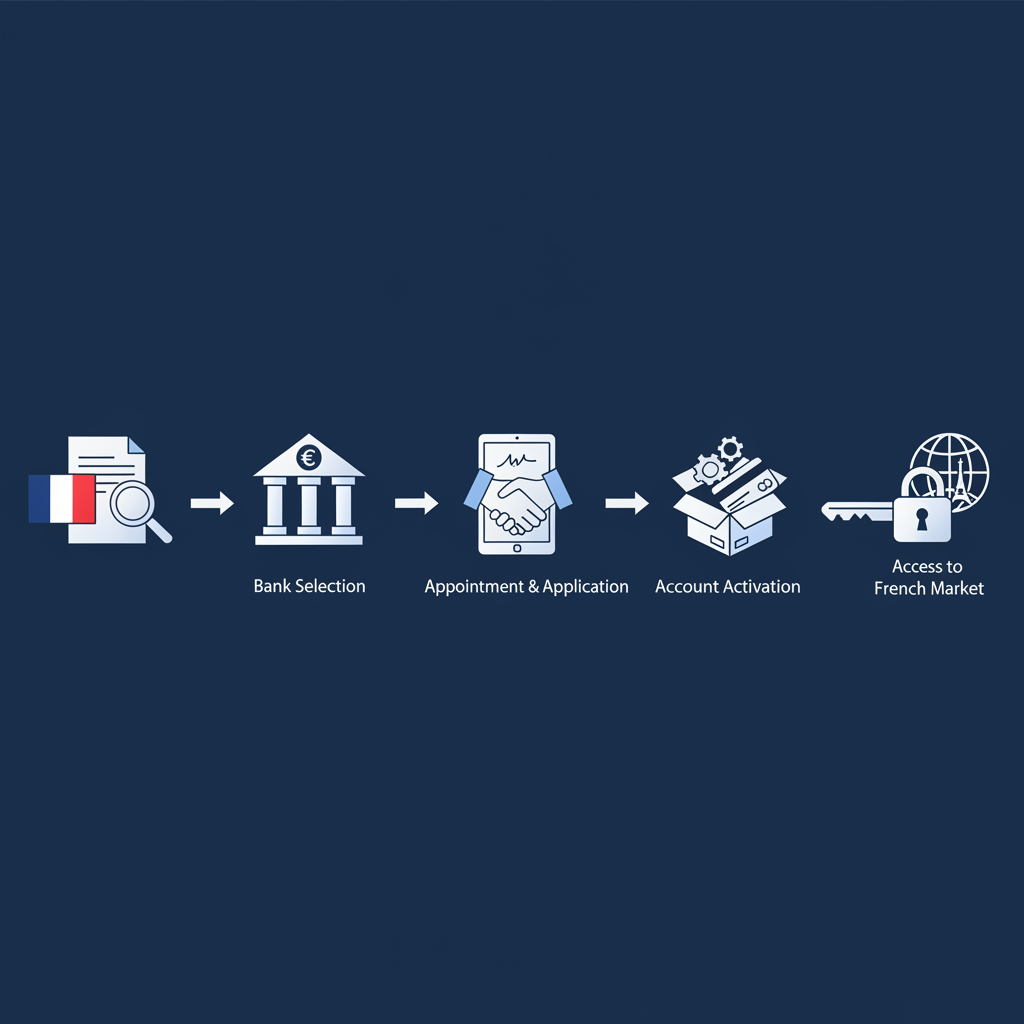
Opening a corporate bank account in France typically involves several steps, from initial contact to account activation.
Step 1: Research and Bank Selection
Begin by researching different banks. Consider factors such as:
- Fees: Monthly maintenance fees, transaction costs, international transfer fees, and debit/credit card charges.
- Services: Online banking capabilities, multi-currency accounts, lending options, and dedicated business advisors.
- International Reach: If your business has international operations, a bank with a strong global network might be beneficial.
- Language Support: Availability of English-speaking staff or dedicated international desks.
- Reputation and Reliability: Choose a bank with a solid track record.
It's advisable to contact a few banks to compare their offerings and requirements. Some banks are more accustomed to dealing with international clients than others.
Step 2: Initial Contact and Appointment
Once you've shortlisted potential banks, make an initial contact, usually by phone or through their website. Explain your business needs and request an appointment with a business advisor. Be prepared to provide a brief overview of your company and your banking requirements.
Step 3: Submission of Documents and Interview
During the appointment, you will submit all the required documentation. The bank advisor will review these documents and conduct an interview to understand your business activities, financial projections, and the expected volume and nature of transactions. This interview is a critical part of the bank's due diligence process.
For foreign companies or those with non-resident directors, the bank may require an in-person meeting in France. If this is not feasible, some banks might accept notarised copies of documents and video conferencing, but this is less common for initial account opening.
Step 4: Due Diligence and Approval
After document submission and the interview, the bank will conduct its internal due diligence. This process can take anywhere from a few days to several weeks, depending on the complexity of your company's structure, the completeness of your documentation, and the bank's internal workload. During this phase, the bank may request additional information or clarifications.
Upon successful completion of due diligence, the bank will approve your application. You will then receive account opening forms and agreements to sign.
Step 5: Account Activation and Initial Deposit
Once all paperwork is signed and returned, your corporate bank account will be activated. You may need to make an initial deposit to fully activate the account and receive your bank details (RIB - Relevé d'Identité Bancaire), debit cards, and online banking access credentials.
Costs, Timelines, and Potential Challenges
Costs
- Account Maintenance Fees: Most French banks charge monthly or quarterly fees for corporate accounts, typically ranging from €10 to €50, depending on the services included.
- Transaction Fees: Fees for international transfers, cheque processing, and sometimes even for certain online transactions.
- Card Fees: Annual fees for corporate debit and credit cards.
- Translation and Legalisation Costs: Significant costs can be incurred for certified translations and apostilles of documents, especially for non-EU entities.
Timelines
The entire process, from initial contact to account activation, can take anywhere from 2 weeks to 2 months, or even longer for complex cases. It's advisable to start the process well in advance of your planned business operations.
Potential Challenges
- Language Barrier: While many banks have English-speaking staff, core documentation and some communications may still be in French.
- Stringent KYC: The strict AML/CTF regulations can lead to extensive document requests and longer processing times.
- Physical Presence Requirement: Some banks prefer or require a physical meeting with directors/UBOs in France.
- Lack of French Nexus: Companies without a clear operational presence or significant economic activity in France may find it harder to open an account.
- Refusal of Account: Banks have the right to refuse to open an account without providing a reason. If this happens, you can invoke the 'droit au compte' (right to an account) procedure with the Banque de France, which will designate a bank to provide basic banking services.
Conclusion
Opening a corporate bank account in France is a critical step for any business looking to establish or expand its operations in the country. While the process demands meticulous preparation, adherence to regulatory requirements, and patience, it is entirely manageable with the right approach. By understanding the French banking landscape, gathering all necessary documentation in advance, and selecting a suitable banking partner, businesses can navigate this process effectively. Early engagement with banks, clear communication, and a comprehensive understanding of your own company's structure and financial needs will significantly streamline the account opening journey, paving the way for successful business operations in France. Remember that professional assistance from legal or corporate service providers can be invaluable, especially for foreign entities, to ensure compliance and efficiency throughout the process.