Opening a Corporate Bank Account in Hong Kong: A Comprehensive Step-by-Step Guide for International Businesses
Navigating the complexities of opening a corporate bank account in Hong Kong is crucial for international businesses seeking to leverage its global financial hub status. This guide provides a detailed, step-by-step walkthrough, covering regulatory requirements, documentation, and best practices to ensure a smooth application process.
Hong Kong has long been celebrated as a premier international financial centre, offering unparalleled access to global markets, a robust legal framework, and a business-friendly environment. For entrepreneurs and established corporations alike, establishing a corporate bank account in Hong Kong is a pivotal step towards leveraging these advantages. However, in an era of heightened global anti-money laundering (AML) and know-your-customer (KYC) regulations, the process has become increasingly stringent. This comprehensive guide aims to demystify the procedure, providing a clear, step-by-step roadmap for successfully opening a corporate bank account in Hong Kong.
Understanding the Hong Kong Banking Landscape
Hong Kong's banking sector is diverse, comprising a mix of local and international banks, each with varying requirements and service offerings. Major players include HSBC, Standard Chartered, Bank of China (Hong Kong), DBS, and Citibank, among others. While all banks operate under the stringent oversight of the Hong Kong Monetary Authority (HKMA), their internal policies regarding corporate account opening can differ significantly. Some banks may be more accommodating to startups or specific industries, while others might prefer established businesses with a substantial operational history. It is crucial to research and select a bank that aligns with your business needs, size, and operational profile.
Key Considerations Before Application
Before initiating the application process, several factors warrant careful consideration:
- Business Nature and Activity: Banks will scrutinise the nature of your business, its operational activities, and the source of funds. Businesses involved in high-risk sectors (e.g., cryptocurrency, gambling, certain manufacturing) may face additional scrutiny or even rejection.
- Jurisdiction of Company Incorporation: While Hong Kong-incorporated companies generally have an easier time, foreign-incorporated entities can also open accounts, though they may require more extensive documentation and justification for their presence in Hong Kong.
- Director and Shareholder Residency: Banks often prefer that at least one director or signatory be a Hong Kong resident, as this simplifies the KYC process. If all directors are non-residents, the application might take longer and require more detailed explanations of the company's connection to Hong Kong.
- Physical Presence and Substance: Banks are increasingly looking for evidence of genuine business substance in Hong Kong. This could include a physical office, local employees, local clients, or suppliers. A mere registered address without any operational activity might raise red flags.
- Transaction Volume and Type: Be prepared to articulate your expected transaction volume, currency requirements, and the nature of your international transfers. This helps banks assess the suitability of their services for your business.
Step-by-Step Application Process
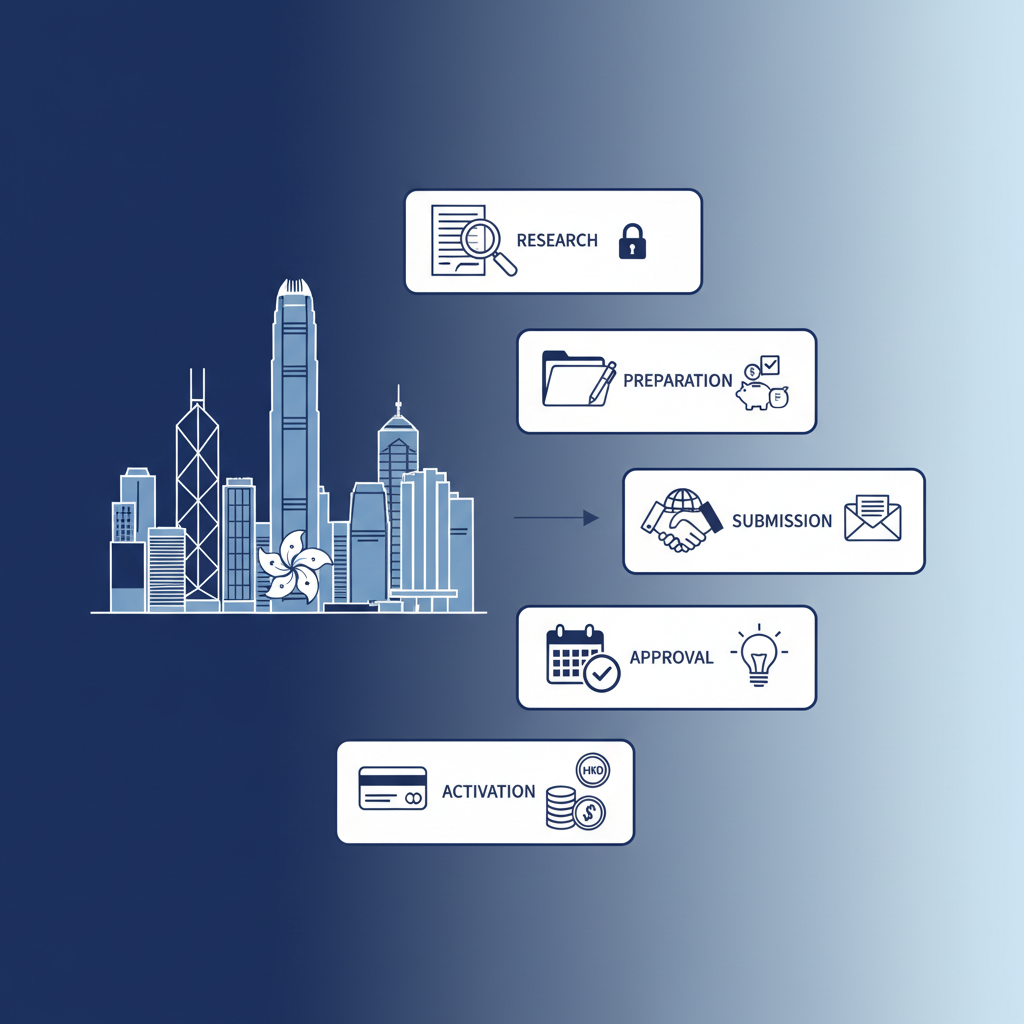
The process of opening a corporate bank account typically involves several stages, from initial preparation to final approval.
Step 1: Preparation and Documentation Gathering
This is arguably the most critical step. Incomplete or incorrect documentation is a primary reason for application delays or rejections. While specific requirements vary by bank, a general list of essential documents includes:
- Company Incorporation Documents: Certificate of Incorporation, Business Registration Certificate, Articles of Association, latest Annual Return (if applicable), and any change of company name or share capital documents.
- Director and Shareholder Information: Certified copies of passports/identity cards for all directors, shareholders (holding 10% or more shares), and authorised signatories. Proof of residential address (e.g., utility bill, bank statement) for each individual, dated within the last three months.
- Business Proof: A detailed business plan outlining the company's activities, target markets, source of funds, expected transaction patterns, and justification for needing a Hong Kong bank account. Evidence of business operations such as existing contracts, invoices, websites, or marketing materials.
- Source of Funds/Wealth: For significant shareholders or beneficial owners, banks may request documentation proving the source of their personal wealth or the company's initial capital.
- Bank Reference Letter: A reference letter from a bank where the company's directors or major shareholders hold a personal or corporate account, confirming their good standing.
- Company Seal/Chop: Required for signing certain bank forms.
All documents not originally in English or Chinese must be accompanied by a certified translation.
Step 2: Choosing a Bank and Initial Contact
Based on your research and business profile, select a few potential banks. It's advisable to contact their corporate banking department directly to inquire about their specific requirements, minimum deposit amounts, and any industry-specific restrictions. Many banks now offer online pre-application forms or initial consultations to assess eligibility.
Step 3: Submission of Application and Interview
Once you have gathered all necessary documents, you will typically need to submit them along with the completed application forms. Most banks require an in-person interview with at least one director or authorised signatory. This interview is a crucial part of the KYC process, allowing the bank to understand your business better, verify information, and assess the legitimacy of your operations. Be prepared to discuss your business model, target customers, suppliers, and the rationale for banking in Hong Kong. For non-resident directors, some banks may allow interviews via video conference, but this is not universally accepted.
Step 4: Due Diligence and Approval Process
After the interview and document submission, the bank will conduct its extensive due diligence. This involves verifying all provided information, conducting background checks on directors and shareholders, and assessing the company's risk profile. This stage can take several weeks, or even months, depending on the complexity of your business, the completeness of your documentation, and the bank's internal processes. During this period, the bank may request additional information or clarification.
Step 5: Account Activation
Upon successful completion of due diligence and approval, the bank will notify you. You will then need to make the initial deposit (if required) to activate the account. You will receive your account details, online banking credentials, and any associated debit/credit cards.
Costs and Timelines
- Costs: While opening an account itself doesn't incur a direct fee, banks often have minimum balance requirements, monthly maintenance fees, and charges for specific transactions. Some banks may also charge an application fee, especially for non-resident companies. Legal and secretarial service providers can assist with document preparation and liaison with banks, incurring their own professional fees.
- Timelines: The timeline for opening a corporate bank account in Hong Kong has significantly extended in recent years. While it was once possible to open an account in a few days, it now typically takes anywhere from 4 to 12 weeks, and in some complex cases, even longer. Patience and thorough preparation are paramount.
Common Challenges and How to Overcome Them
- Stringent KYC/AML: The biggest hurdle. Ensure all documents are certified correctly, and be transparent and comprehensive in your responses to bank queries.
- Lack of Hong Kong Substance: If you don't have a physical office or local staff, clearly articulate your business's genuine connection to Hong Kong, such as local clients, suppliers, or investment activities.
- Non-Resident Directors: If all directors are non-residents, consider appointing a local director or demonstrating a strong operational link to Hong Kong.
- High-Risk Industries: If your business is in a perceived high-risk sector, be prepared with extra documentation, compliance frameworks, and a robust explanation of your risk mitigation strategies.
- Language Barrier: While English is widely spoken, having documents translated and potentially engaging a local consultant can smooth the process.
Conclusion
Opening a corporate bank account in Hong Kong is an essential step for businesses looking to tap into Asia's dynamic markets and the global financial system. While the process has become more demanding due to enhanced regulatory scrutiny, it remains achievable with meticulous preparation, a clear understanding of banking requirements, and a proactive approach. By carefully selecting the right bank, gathering all necessary documentation, and articulating a compelling business case, entrepreneurs can successfully establish their financial foothold in this vibrant international hub. Engaging with experienced local corporate service providers can also significantly streamline the process, offering expert guidance and support through each stage of the application.