Navigere US kildeskatt på utbytte og royalty for internasjonale virksomheter
Å forstå US kildeskatt på utbytte og royalty er avgjørende for ikke-bosatte utlendinger og utenlandske selskaper. Denne artikkelen gir en omfattende guide til regelverk, satser, fritak og traktatfordeler som påvirker disse betalingene, og tilbyr praktiske innsikter for internasjonal forretningsvirksomhet.
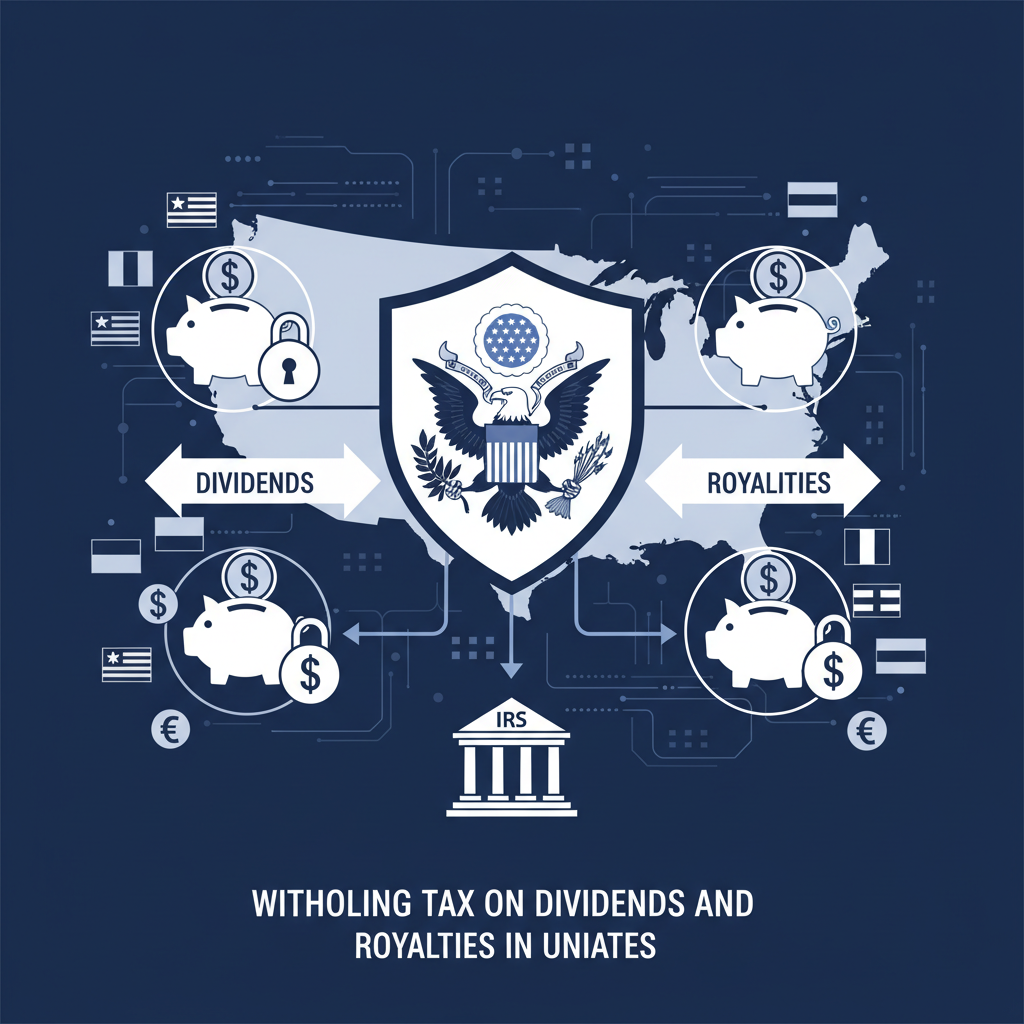
Navigating US Withholding Tax on Dividends and Royalties for International Businesses
The United States, as a global economic powerhouse, attracts significant foreign investment and intellectual property transactions. For non-resident aliens (NRAs) and foreign corporations receiving certain types of income from US sources, understanding the intricacies of US withholding tax is paramount. This article delves into the specifics of withholding tax on dividends and royalties, providing a comprehensive overview for entrepreneurs, investors, and business professionals operating across borders.
Understanding US Withholding Tax Fundamentals
Withholding tax is a tax on income paid to non-resident aliens and foreign corporations from US sources. This tax is generally withheld at the source by the payer, who then remits it to the Internal Revenue Service (IRS). The primary purpose of withholding tax is to ensure that the US government collects taxes on income earned within its borders by foreign entities that may not file a US tax return.
For most types of US-source income received by foreign persons, the statutory withholding tax rate is 30%. This rate applies to what the IRS classifies as "fixed or determinable annual or periodical" (FDAP) income. Dividends and royalties fall squarely into this category. However, this 30% rate is often reduced or even eliminated by income tax treaties between the United States and various foreign countries.
Who is Subject to Withholding Tax?
Individuals who are not US citizens or resident aliens, and corporations not incorporated in the US, are generally considered foreign persons for US tax purposes. If these foreign persons receive FDAP income from US sources, they are typically subject to withholding tax. It's crucial to distinguish between effectively connected income (ECI) and FDAP income. ECI, which is income connected with a US trade or business, is generally taxed at graduated rates after deductions, similar to US persons, and is not subject to the 30% withholding tax on gross income. FDAP income, however, is subject to the gross 30% withholding unless a treaty or specific exemption applies.
Payer's Responsibilities
US persons or entities making payments of dividends or royalties to foreign persons have a legal obligation to withhold the correct amount of tax. This involves identifying the payee's foreign status, determining the correct withholding rate (considering treaty benefits), and remitting the withheld tax to the IRS. Failure to properly withhold can result in penalties for the payer. Payers typically use Form W-8BEN (Certificate of Foreign Status of Beneficial Owner for United States Tax Withholding and Reporting) or other W-8 series forms to collect information from foreign payees to determine their status and eligibility for reduced withholding rates.
Withholding Tax on Dividends
Dividends paid by a US corporation to a foreign shareholder are generally subject to US withholding