Åpne en bedriftsbankkonto i Nederland: En omfattende trinn-for-trinn-guide for virksomheter
Å navigere prosessen med å åpne en bedriftsbankkonto i Nederland kan være komplisert for internasjonale virksomheter. Denne omfattende guiden gir en trinnvis oversikt, beskriver viktige krav, regulatoriske vurderinger og praktiske råd for å sikre en smidig og effektiv oppsett for ditt nederlandske foretak.
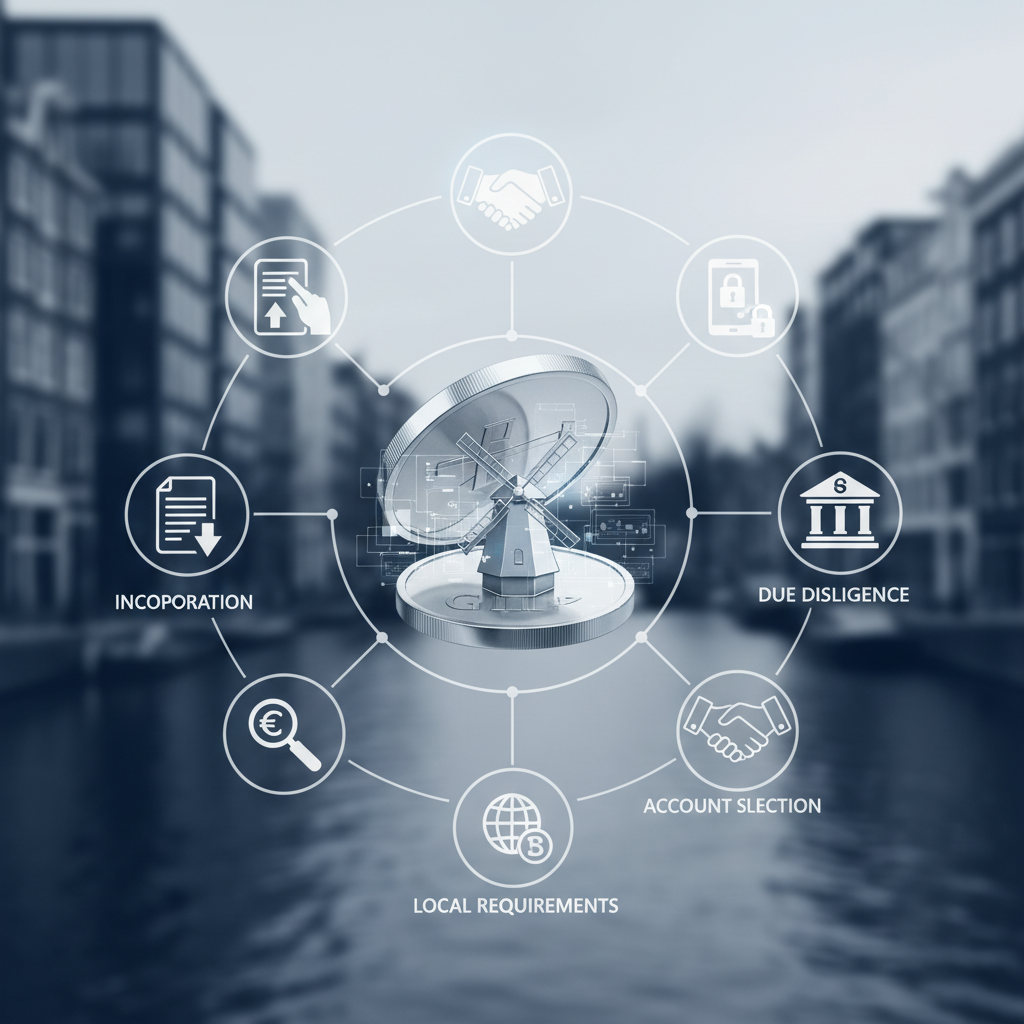
Opening a Corporate Bank Account in the Netherlands: A Step-by-Step Guide
The Netherlands, with its robust economy, strategic location, and business-friendly environment, continues to attract a significant number of international entrepreneurs and companies. Establishing a corporate presence in this European hub often necessitates opening a local bank account, a critical step for managing finances, conducting transactions, and ensuring compliance with Dutch regulations. While seemingly straightforward, the process can present unique challenges for foreign entities, primarily due to stringent anti-money laundering (AML) and know-your-customer (KYC) requirements. This guide will provide a comprehensive, step-by-step overview for businesses looking to open a corporate bank account in the Netherlands.
Understanding the Dutch Banking Landscape and Regulatory Framework
The Dutch banking sector is highly regulated, primarily by De Nederlandsche Bank (DNB), the central bank, and the Autoriteit Financiële Markten (AFM), the financial markets authority. These bodies ensure financial stability, consumer protection, and adherence to international standards, including those set by the Financial Action Task Force (FATF). Consequently, banks in the Netherlands are meticulous in their due diligence processes, particularly when dealing with foreign-owned or internationally-structured companies. This rigorous approach is designed to combat financial crime and maintain the integrity of the financial system.
Key players in the Dutch corporate banking sector include major institutions like ING, ABN AMRO, and Rabobank, alongside a growing number of challenger banks and fintech solutions. Each bank may have slightly different requirements, fee structures, and service offerings tailored to various business sizes and industries. It is crucial for businesses to research these options thoroughly to find a bank that best aligns with their operational needs and financial objectives.
Essential Regulatory Considerations
- AML/KYC Compliance: This is the cornerstone of Dutch banking. Banks will require extensive documentation to verify the identity of all beneficial owners, directors, and significant shareholders of the company, as well as to understand the nature of the business activities and the source of funds. Expect requests for certified copies of passports, proof of address, and detailed business plans.
- Tax Identification Number (TIN): For Dutch-registered companies, a valid Dutch Chamber of Commerce (KvK) registration number and a BTW (VAT) number are essential. For foreign entities, specific tax identification from their country of origin may be required initially, with a Dutch TIN becoming necessary upon formal establishment.
- Substance Requirements: Banks often look for evidence of genuine economic activity and substance in the Netherlands. This can include having a physical office address, local employees, and a clear business pu