
Poruszanie się po duńskich wodach: Kompleksowy przewodnik po zakładaniu spółki w Danii
Dania, konsekwentnie plasująca się wśród najłatwiejszych miejsc do prowadzenia działalności gospodarczej, oferuje atrakcyjne warunki dla przedsiębiorców. Ten artykuł zawiera szczegółowy przewodnik po wymaganiach i procesach związanych z zakładaniem spółki w Danii, obejmujący struktury prawne, rejestrację oraz bieżące obowiązki.
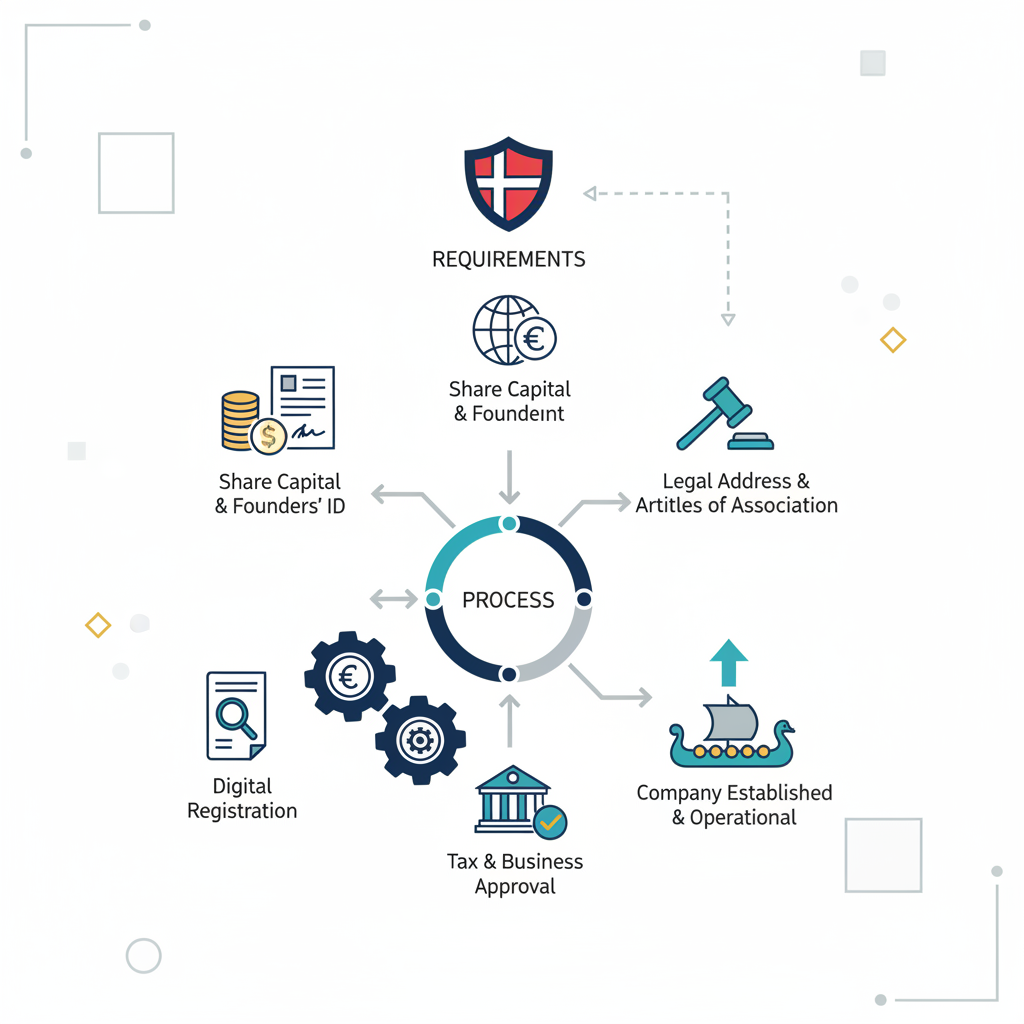
Navigating Danish Waters: A Comprehensive Guide to Company Formation in Denmark
Denmark has long been recognized as a beacon of business efficiency and innovation, consistently ranking high in global indices for ease of doing business. Its stable economy, highly skilled workforce, digital infrastructure, and transparent regulatory environment make it an appealing destination for both domestic and international entrepreneurs looking to establish a presence in the European market. However, successfully navigating the company formation process requires a clear understanding of the legal requirements, available business structures, and administrative procedures. This comprehensive guide aims to demystify the journey of establishing a company in Denmark.
1. Choosing the Right Legal Structure
The first critical step in forming a company in Denmark is selecting the appropriate legal structure. This decision has significant implications for liability, taxation, administrative burden, and capital requirements. The most common business forms include:
1.1. Private Limited Company (Anpartsselskab - ApS)
The ApS is the most popular choice for small and medium-sized enterprises (SMEs) due to its limited liability protection for shareholders. It requires a minimum share capital of DKK 40,000 (approximately EUR 5,300), which can be contributed in cash or assets. An ApS must have a board of directors or a management board, and at least one director must be a resident of Denmark or an EU/EEA country. This structure offers flexibility and is relatively straightforward to manage.
1.2. Public Limited Company (Aktieselskab - A/S)
An A/S is suitable for larger businesses seeking to raise significant capital, often through public offerings. It requires a much higher minimum share capital of DKK 400,000 (approximately EUR 53,000). An A/S must have both a management board and a supervisory board, or a combined board of directors. At least half of the board members must be residents of Denmark or an EU/EEA country. This structure is more complex and subject to stricter regulatory oversight.
1.3. Sole Proprietorship (Enkeltmandsvirksomhed)
For individual entrepreneurs, the sole proprietorship is the simplest and least expensive option. There is no minimum capital requirement, and the owner has full control over the business. However, the owner is personally liable for all business debts and obligations, meaning personal assets are not protected. This structure is often chosen for small-scale operations or freelancers.
1.4. Branch Office (Filial)
A foreign company can establish a branch office in Denmark. A branch office is not a separate legal entity but an extension of the parent company. The parent company is fully liable for the branch's obligations. This option is suitable for companies that wish to test the Danish market or conduct specific activities without forming a new Danish legal entity.


