
Zakładanie spółki holdingowej w Hiszpanii: korzyści, proces i strategiczne przewagi
Ten obszerny artykuł bada strategiczne zalety i szczegółowy proces zakładania spółki holdingowej w Hiszpanii. Omawia znaczące korzyści podatkowe, ramy regulacyjne oraz praktyczne kroki dla przedsiębiorców i firm międzynarodowych, które chcą zoptymalizować swoją strukturę korporacyjną i rozszerzyć działalność na rynek europejski.
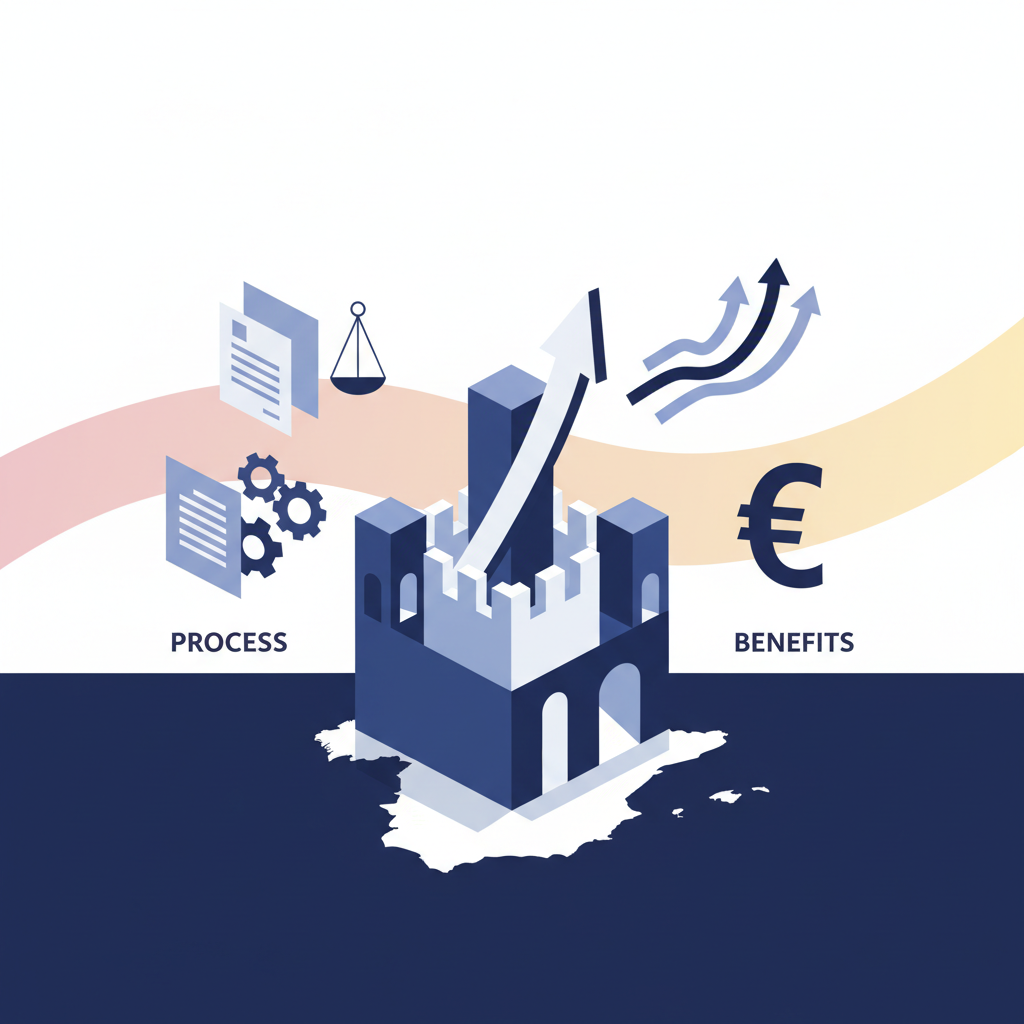
Introduction: The Strategic Appeal of a Spanish Holding Company
Spain, with its strategic location, robust legal framework, and attractive tax incentives, has emerged as a compelling jurisdiction for establishing holding companies. For international businesses and entrepreneurs seeking to optimize their corporate structure, manage diverse investments, and expand their footprint within the European Union and Latin America, a Spanish holding company offers a suite of advantages. This article will meticulously explore the benefits, regulatory landscape, and the step-by-step process of setting up a holding company in Spain, providing a clear roadmap for prospective investors.
A holding company, fundamentally, is a parent corporation that owns enough voting stock in other companies (subsidiaries) to control their policies and management. It typically does not produce goods or services itself but rather holds assets, which can include shares in other companies, intellectual property, or real estate. In Spain, the most common legal forms for holding companies are the Sociedad Limitada (S.L.) or Sociedad Anónima (S.A.), with the S.L. being favored for its simplicity and lower capital requirements for smaller and medium-sized enterprises.
Key Benefits of Establishing a Holding Company in Spain
Establishing a holding company in Spain presents several compelling benefits, primarily centered around tax efficiency, legal protection, and operational flexibility.
1. Favorable Tax Regime: The Participation Exemption
One of the most significant attractions of a Spanish holding company is its highly advantageous tax regime, particularly the participation exemption. This regime is designed to prevent double taxation on dividends and capital gains derived from qualifying participations in subsidiaries.
-
Exemption on Dividends: Under the Spanish participation exemption regime, dividends received by a Spanish holding company from its subsidiaries, whether Spanish or foreign, are largely exempt from corporate income tax (Impuesto sobre Sociedades – IS). To qualify, the Spanish holding company must hold at least 5% of the subsidiary's share capital for an uninterrupted period of at least one year. Furthermore, the subsidiary must be subject to a tax similar to Spain's corporate income tax at a minimum rate of 10% (this condition is often met by most foreign companies). This exemption can reduce the effective tax rate on dividend income to virtually zero.
-
Exemption on Capital Gains: Similarly, capital gains derived from the sale of qualifying participations in subsidiaries are also exempt from corporate income tax in Spain, provided the same conditions for dividend exemption are met. This makes Spain an excellent jurisdiction for managing and divesting investments without incurring significant tax liabilities on capital appreciation.
-
No Withholding Tax on Outgoing Dividends (EU/EEA): For distributions from the Spanish holding com


