德国企业税率与激励措施:企业全面概览
德国作为欧洲经济的动力源,提供了一个复杂但结构化的企业税收环境。本文全面解析了德国企业税率的细节,概述了各组成部分、可用的激励措施及企业在该国经营或拟设立机构时需注意的重要合规要点。
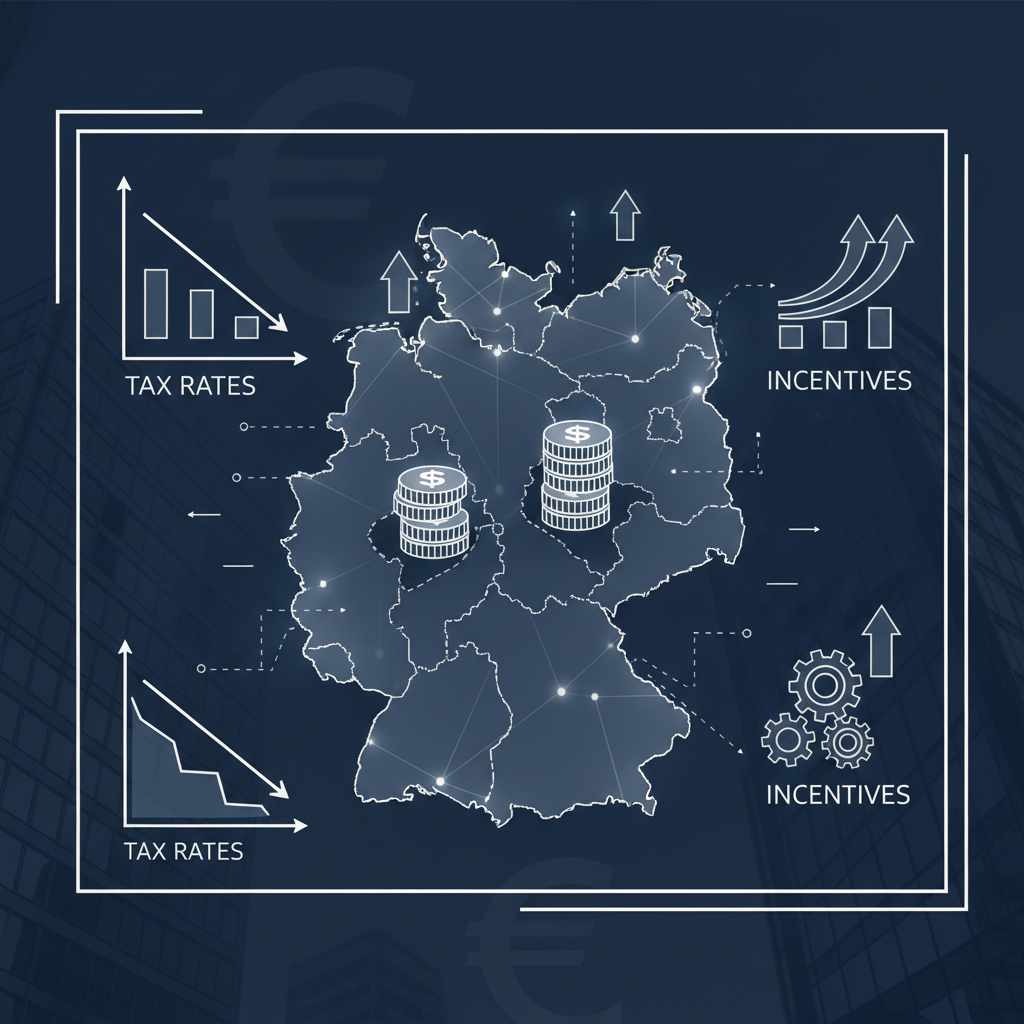
Corporate Tax Rates and Incentives in Germany: A Complete Overview for Businesses
Germany stands as a pivotal economic force within the European Union, renowned for its robust industrial base, innovative spirit, and stable legal framework. For entrepreneurs and businesses considering market entry or expansion, understanding the German corporate tax system is paramount. This article provides a comprehensive overview of corporate tax rates, key incentives, and essential compliance aspects, offering actionable insights for navigating this sophisticated environment.
Understanding the German Corporate Tax System
The German corporate tax system is characterised by a multi-layered approach, combining federal and municipal levies. Unlike some jurisdictions with a single corporate income tax rate, Germany's effective tax burden on corporate profits is a composite of several taxes. The primary components are Corporate Income Tax (Körperschaftsteuer), Solidarity Surcharge (Solidaritätszuschlag), and Trade Tax (Gewerbesteuer).
Corporate Income Tax (Körperschaftsteuer)
The Corporate Income Tax (CIT) is a federal tax levied on the profits of corporations (e.g., GmbH, AG). The standard rate for CIT in Germany is a flat 15%. This rate applies to the taxable income of the corporation after deducting allowable expenses. It's crucial to note that this 15% is just one part of the overall tax burden.
Solidarity Surcharge (Solidaritätszuschlag)
Introduced to finance the reunification of Germany, the Solidarity Surcharge, or 'Soli', is an additional levy on the Corporate Income Tax. For corporations, it is calculated at 5.5% of the CIT amount. This means that for every 100 euros of CIT, an additional 5.50 euros is paid as Soli. While there have been discussions and partial abolitions for individuals, it largely remains applicable to corporate entities.
Trade Tax (Gewerbesteuer)
The Trade Tax is a municipal tax levied by local authorities on the trading income of businesses. Its calculation is more complex as it involves a federal base rate and a municipal multiplier. The federal base rate for Trade Tax is 3.5%. This base rate is then multiplied by a 'Hebesatz' (municipal multiplier) determined by each municipality. Municipal multipliers vary significantly across Germany, ranging from approximately 200% to 900%. This variation means that the effective Trade Tax rate can range from 7% (3.5% x 200%) to 31.5% (3.5% x 900%).
For example, a company located in a municipality with a multiplier of 400% would face an effective Trade Tax rate of 14% (3.5% x 400%). Larger cities generally have higher multipliers. It's important to note that for unincorporated businesses (e.g., sole proprietorships, partnerships), the Trade Tax paid can, to a certain extent, be credited against their personal income tax liability, mitigating its impact. However, for corporations, the Trade Tax is a non-deductible expense for CIT purposes, increasing the overall tax burden