在英国处理股息和特许权使用费的预提税
理解英国对股息和特许权使用费的预提税(WHT)对国际企业和投资者至关重要。本综合指南深入探讨了预提税的法规、豁免及实际影响,为合规与战略规划提供必要洞见。
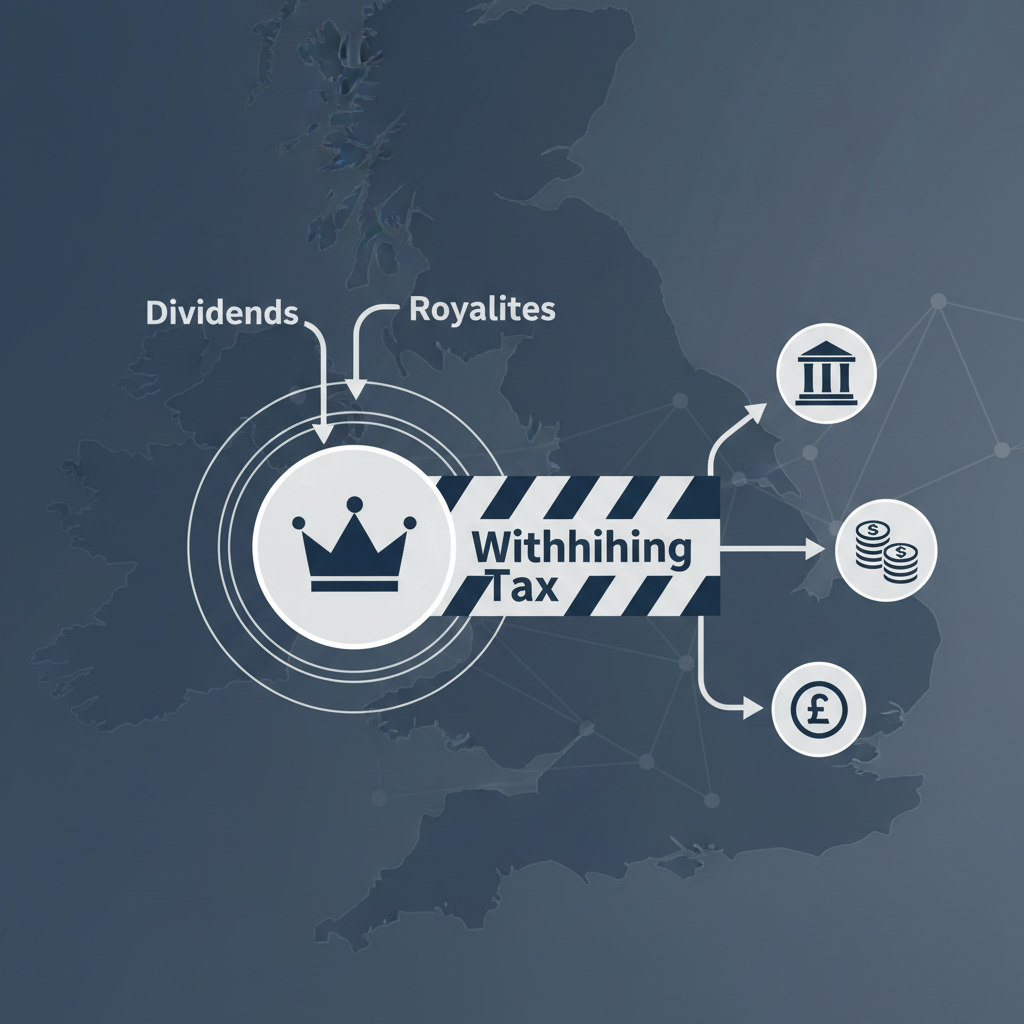
Introduction to Withholding Tax in the UK
Withholding tax (WHT) is a fundamental aspect of international taxation, impacting businesses and investors operating across borders. In the United Kingdom, WHT applies to certain types of income paid to non-residents, primarily focusing on interest, royalties, and to a lesser extent, dividends. For entrepreneurs and business professionals engaged in cross-border transactions involving the UK, a thorough understanding of these regulations is not merely beneficial but essential for ensuring compliance, optimising tax liabilities, and avoiding potential penalties. This article provides a detailed exploration of WHT on dividends and royalties within the UK context, outlining the statutory provisions, key exemptions, the role of double taxation treaties, and practical considerations for businesses.
Unlike many other jurisdictions, the UK generally does not impose WHT on dividends paid by UK companies to non-resident shareholders. This policy is a significant differentiator and often makes the UK an attractive location for holding companies and international investment. However, there are nuances and specific circumstances where WHT might apply, particularly in the context of certain types of distributions or where anti-avoidance rules are triggered. For royalties, the situation is more direct: WHT is typically levied on payments made to non-residents for the use of intellectual property. Navigating these rules requires careful attention to detail and an awareness of both domestic law and international tax agreements.
Withholding Tax on Dividends
General Rule: No WHT on Dividends
The most striking feature of the UK's WHT regime concerning dividends is its general absence. As a rule, UK companies are not required to withhold tax when paying dividends to non-resident shareholders, regardless of whether those shareholders are individuals or corporate entities. This policy stems from the UK's imputation system, which was abolished in 1999, and the subsequent move to a system where corporate profits are taxed at the company level, and dividends are generally treated as distributions of after-tax profits. This approach aims to prevent double taxation at the corporate and shareholder levels within the UK domestic context and extends to non-resident shareholders.
This absence of WHT on dividends significantly simplifies cross-border investment into the UK and enhances the UK's appeal as a jurisdiction for international holding structures. For instance, a foreign parent company receiving dividends from its UK subsidiary will typically receive the full dividend amount without any UK tax deducted at source. However, it is crucial to remember that while the UK may not impose WHT, the recipient's home country will likely tax the dividend income according to its own domestic tax laws, often with provisions for foreign tax credits to avoid double taxation.
Exceptions and Specific Circumstances
尽管