E-Commerce Startup Guide: Launching Your Online Business in Ireland
This comprehensive guide provides entrepreneurs with essential insights into establishing and growing an e-commerce business in Ireland. It covers critical aspects from legal structures and tax compliance to payment processing, logistics, and digital marketing strategies, ensuring a solid foundation for success in the Irish market.
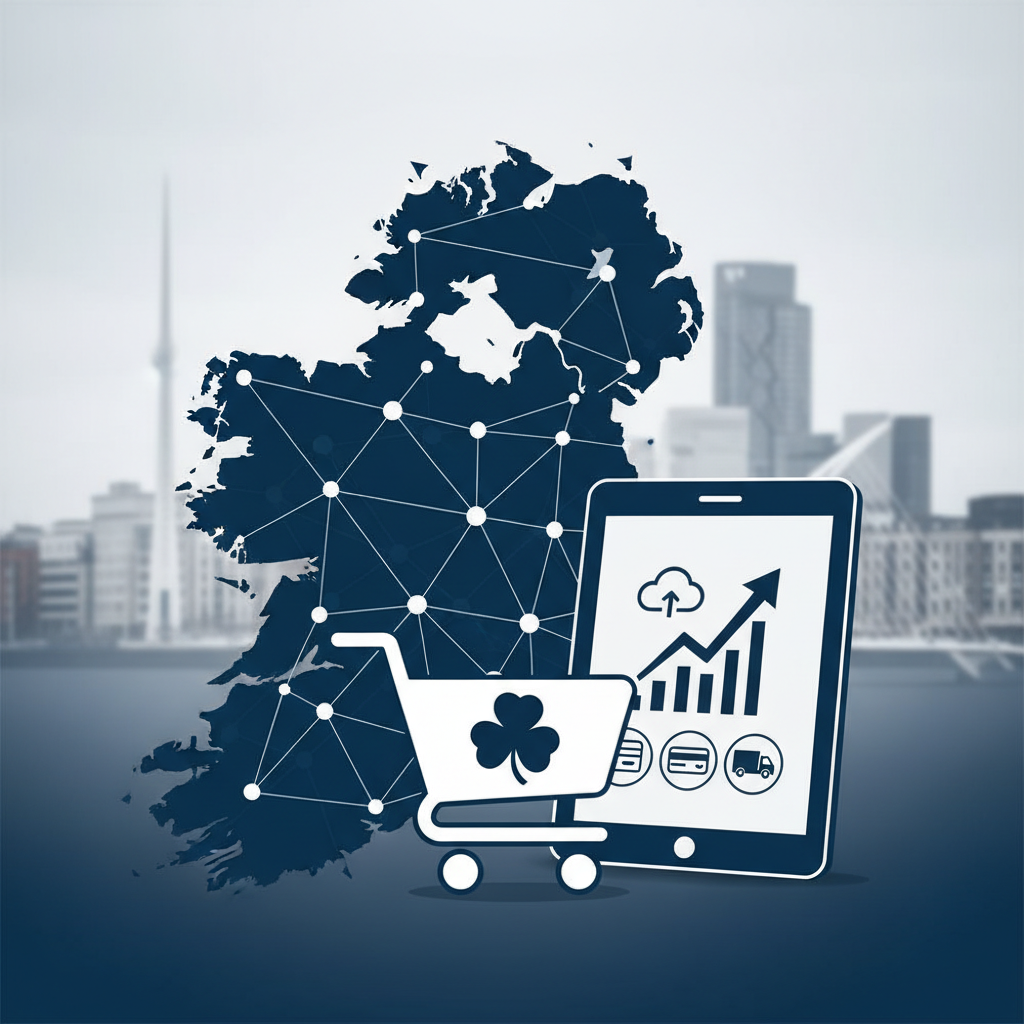
E-Commerce Startup Guide: Launching Your Online Business in Ireland
Ireland presents a dynamic and increasingly digital landscape for e-commerce entrepreneurs. With a tech-savvy population, strong economic growth, and a strategic position as a gateway to both the EU and UK markets, establishing an online business here offers significant opportunities. However, navigating the regulatory environment, understanding local consumer behaviour, and implementing effective operational strategies are crucial for success. This guide provides a detailed roadmap for launching and scaling an e-commerce venture in Ireland.
1. Legal and Regulatory Foundations
Establishing a solid legal and regulatory foundation is the first critical step for any e-commerce startup in Ireland. This involves choosing the right business structure, registering with the appropriate authorities, and understanding key compliance requirements.
Business Structure Selection
The most common business structures for e-commerce in Ireland are:
- Sole Trader: Simple to set up and manage, but offers no distinction between personal and business liabilities. Suitable for very small operations initially.
- Partnership: Similar to a sole trader but with two or more individuals. Partners share profits and liabilities.
- Limited Company (Private Company Limited by Shares - LTD): This is often the preferred choice for e-commerce businesses due to its limited liability protection, meaning personal assets are separate from business debts. It also conveys a more professional image and can be easier for securing investment. Setting up an LTD involves registering with the Companies Registration Office (CRO) and adhering to company law requirements, including annual returns and audited accounts (unless exempt).
Business Registration and Taxation
Once a business structure is chosen, registration is mandatory. For sole traders and partnerships, registration with Revenue (Ireland's tax authority) is required. For limited companies, the process involves:
- Company Name Reservation: Check availability with the CRO.
- Incorporation: Submit the A1 form (incorporation document) to the CRO, along with the company's Memorandum and Articles of Association. The cost is typically around €50 for online applications.
- Tax Registration: Register the company for Corporation Tax, VAT (if turnover exceeds €40,000 for services or €80,000 for goods in a 12-month period), and PAYE/PRSI (if employing staff) with Revenue. VAT registration is particularly important for e-commerce, especially if selling across EU borders, due to the One Stop Shop (OSS) scheme for simplified VAT reporting.
Key E-commerce Regulations
Irish and EU law impose specific regulations on online businesses:
- Consumer Rights: The Consumer Rights Act 2022 (Ireland) and EU directives (e.g., Distance Selling Directive) provide consumers with rights regarding returns, refunds, and warranties. Clear terms and conditions, privacy policies, and refund policies must be prominently displayed.
- Data Protection (GDPR): The General Data Protection Regulation (GDPR) is paramount. E-commerce sites must ensure transparent data collection, processing, and storage practices, obtain explicit consent for marketing, and provide mechanisms for users to exercise their data rights. A robust privacy policy is non-negotiable.
- E-Commerce Directive: Requires businesses to provide clear information about themselves (name, address, email, VAT number), pricing, and order processes.
- Accessibility: While not as strictly enforced as in some other jurisdictions, designing an accessible website (WCAG standards) is good practice and can broaden your customer base.
2. E-commerce Platform and Payment Gateways
Selecting the right e-commerce platform and integrating secure payment solutions are fundamental to the operational success of an online store.
Choosing an E-commerce Platform
The choice of platform depends on budget, technical expertise, scalability needs, and desired features:
- SaaS Platforms (Software as a Service): Shopify, Squarespace, Wix, BigCommerce. These are user-friendly, hosted solutions with built-in features, themes, and app integrations. They are ideal for beginners and offer quick setup. Shopify is particularly popular for its extensive app ecosystem and scalability.
- Open-Source Platforms: WooCommerce (for WordPress), Magento. These offer greater customisation and control but require more technical expertise for setup, maintenance, and hosting. They are suitable for businesses with unique requirements or large product catalogues.
- Custom-Built Solutions: For highly specific needs, a custom platform can be developed, though this is the most expensive and time-consuming option.
Consider factors like ease of use, mobile responsiveness, SEO capabilities, inventory management, shipping integrations, customer support, and pricing models (monthly fees, transaction fees).
Payment Gateways
Secure and diverse payment options are crucial for customer conversion. Popular payment gateways in Ireland include:
- Stripe: Widely used, easy to integrate, supports various payment methods (credit/debit cards, Apple Pay, Google Pay), and offers competitive transaction fees.
- PayPal: A globally recognised and trusted payment method, offering buyer and seller protection. Often used in conjunction with other gateways.
- Square: Offers integrated POS and e-commerce solutions, suitable for businesses with both online and physical presence.
- Irish Banks: Many Irish banks (e.g., AIB, Bank of Ireland) offer their own merchant services, which can be integrated into e-commerce platforms.
Ensure your chosen gateway complies with PCI DSS (Payment Card Industry Data Security Standard) requirements to protect customer data. Clearly display accepted payment methods on your website.
3. Logistics, Shipping, and Customer Service
Efficient logistics and excellent customer service are key differentiators in the competitive e-commerce landscape.
Shipping and Fulfilment
- Shipping Carriers: An Post (Ireland's national postal service) offers reliable domestic and international shipping. Other popular couriers include DPD, DHL, UPS, and FedEx, often preferred for faster or tracked services. Compare rates, delivery times, and insurance options.
- Fulfilment Strategy:
- In-house Fulfilment: Managing storage, picking, packing, and shipping yourself. Suitable for smaller volumes.
- Dropshipping: Products are shipped directly from the supplier to the customer. Reduces inventory risk but offers less control over quality and branding.
- Third-Party Logistics (3PL): Outsourcing warehousing and fulfilment to a specialist provider. Scalable solution for growing businesses, especially those with international aspirations. Many 3PLs operate in Ireland.
- Shipping Costs and Policies: Clearly communicate shipping costs, estimated delivery times, and return policies on your website. Consider offering free shipping above a certain order value to encourage larger purchases.
Returns and Refunds
A clear, fair, and easy-to-understand returns policy is vital for building customer trust and complying with consumer protection laws. Under Irish law, consumers generally have 14 days to cancel an online order and return goods, even if they are not faulty. The business then has 14 days to issue a refund. Outline the process for returns, who bears the shipping cost for returns, and the condition in which items must be returned.
Customer Service
- Multi-Channel Support: Offer support through various channels: email, live chat, phone, and social media. Responsiveness is key.
- FAQs and Self-Service: A comprehensive FAQ section can reduce customer service inquiries and empower customers to find answers quickly.
- Personalisation: Where possible, personalise interactions to enhance the customer experience.
- Feedback Mechanisms: Encourage reviews and feedback to continuously improve products and services.
4. Marketing and Growth Strategies
Attracting and retaining customers is paramount. A multi-faceted marketing strategy is essential for an e-commerce business in Ireland.
Digital Marketing Channels
- Search Engine Optimisation (SEO): Optimise your website content, product descriptions, and technical aspects to rank higher in Google search results for relevant keywords. Local SEO is important if targeting the Irish market specifically.
- Paid Advertising (PPC): Google Ads and social media advertising (Facebook, Instagram, TikTok) can drive targeted traffic quickly. Define your target audience carefully and monitor ROI.
- Social Media Marketing: Build a strong brand presence on platforms relevant to your target demographic. Engage with your audience, run contests, and showcase products.
- Email Marketing: Build an email list from day one. Use email campaigns for promotions, new product announcements, abandoned cart reminders, and customer retention.
- Content Marketing: Create valuable blog posts, guides, or videos related to your products or industry to attract and educate potential customers.
- Influencer Marketing: Collaborate with Irish influencers or micro-influencers who align with your brand to reach their audience.
Localisation and Irish Market Nuances
- Language: While English is dominant, consider if any content localisation for Irish Gaelic is beneficial, especially for specific cultural products or services.
- Currency: Display prices in Euro (€) clearly.
- Cultural Sensitivity: Understand local holidays, traditions, and consumer preferences. For example, St. Patrick's Day or Christmas are key retail periods.
- Trust Signals: Display Irish contact details, use .ie domains (if applicable), and showcase positive reviews from Irish customers to build trust.
Analytics and Optimisation
- Website Analytics: Use tools like Google Analytics to track website traffic, conversion rates, bounce rates, and customer behaviour. Understand where your customers are coming from and how they interact with your site.
- A/B Testing: Test different website elements (product descriptions, call-to-action buttons, checkout flows) to identify what performs best.
- Customer Lifetime Value (CLTV): Focus on strategies that increase customer retention and repeat purchases, as acquiring new customers is often more expensive.
Conclusion
Launching an e-commerce business in Ireland offers significant potential for growth and market penetration. Success hinges on meticulous planning, adherence to legal and tax obligations, selection of robust technological solutions, and a customer-centric approach to logistics and service. By carefully navigating the regulatory landscape, optimising your online presence, and implementing effective marketing strategies tailored to the Irish market, entrepreneurs can build a thriving and sustainable e-commerce venture. The commitment to continuous learning, adaptation, and customer satisfaction will be the ultimate determinants of long-term success in this dynamic digital economy.