Navigating Funding Options: A Comprehensive Guide for Startups and SMEs in Cyprus
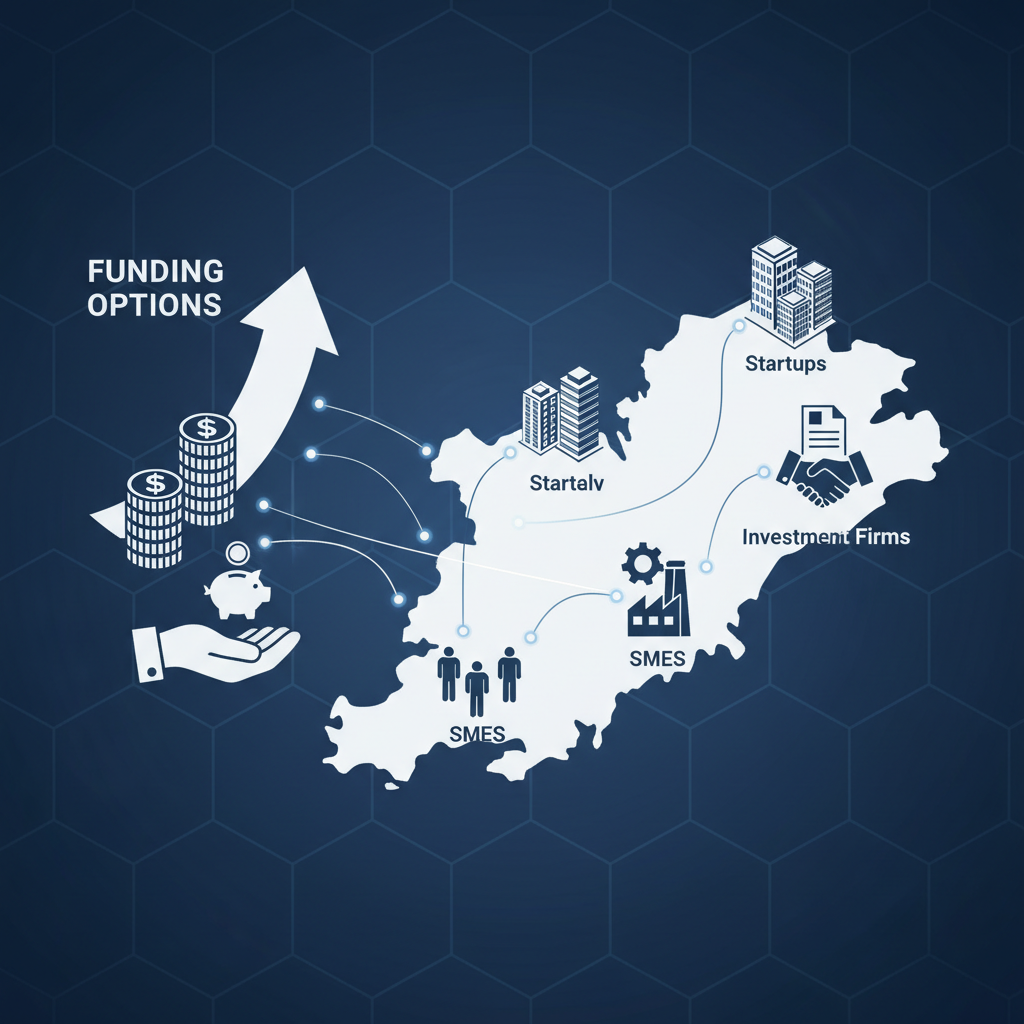
Securing adequate funding is a critical challenge for startups and Small and Medium-sized Enterprises (SMEs) in Cyprus. This article provides an in-depth exploration of the diverse funding avenues available, from traditional banking to innovative government schemes and venture capital, offering practical insights for entrepreneurs.
Introduction: The Funding Landscape for Cypriot Businesses
Cyprus, with its strategic geographical location, favourable tax regime, and robust legal framework, has become an increasingly attractive destination for entrepreneurs and businesses. However, like any burgeoning economy, securing adequate funding remains a pivotal challenge for both nascent startups and established Small and Medium-sized Enterprises (SMEs). The ability to access capital is often the primary determinant of a business's growth trajectory, innovation capacity, and overall survival. This article aims to provide a comprehensive, professional guide to the various funding options available to startups and SMEs in Cyprus, detailing their characteristics, application processes, and suitability for different business stages.
The Cypriot government, alongside European Union initiatives, has actively sought to foster a supportive ecosystem for business development, introducing several schemes and incentives designed to alleviate funding constraints. Understanding these options, their eligibility criteria, and the strategic implications of each is crucial for any entrepreneur looking to establish or expand their presence in the Republic.
Traditional Funding Avenues: Banks and Debt Financing
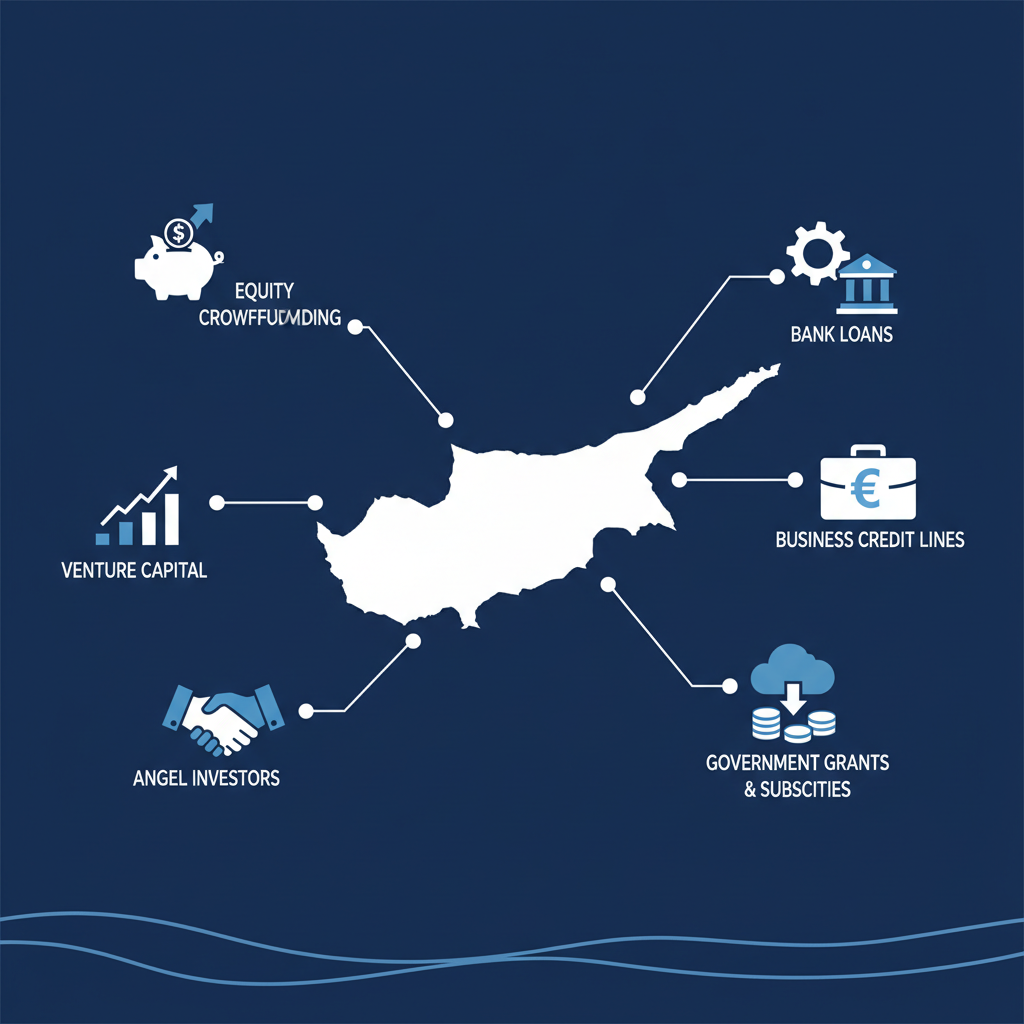
For many businesses, traditional debt financing through commercial banks remains the first port of call. Cypriot banks, including major players like Bank of Cyprus, Hellenic Bank, and Eurobank Cyprus, offer a range of products tailored for businesses, from working capital loans to investment financing. These typically include:
1. Business Loans and Overdraft Facilities
Business loans are a common form of debt financing, providing a lump sum of capital that is repaid with interest over a fixed period. Overdraft facilities offer more flexibility, allowing businesses to draw funds up to an agreed limit, primarily for managing short-term cash flow fluctuations. Eligibility usually hinges on a strong business plan, a solid credit history, collateral (often real estate or other assets), and demonstrable repayment capacity. The application process involves submitting detailed financial statements, projections, and a comprehensive business proposal. Interest rates and repayment terms vary significantly based on the bank, the borrower's risk profile, and prevailing market conditions. While generally more accessible for established SMEs with a track record, some banks offer specific packages for startups, often requiring personal guarantees or government-backed guarantees.
2. European Investment Bank (EIB) and European Investment Fund (EIF) Initiatives
Cypriot banks often act as intermediaries for EIB and EIF funding programmes. These programmes are designed to support SMEs by offering more favourable lending terms, reduced collateral requirements, or lower interest rates, often through guarantee schemes that mitigate risk for the commercial banks. For instance, the EIF often provides guarantees to banks, enabling them to lend to SMEs that might otherwise be considered too risky. Businesses should inquire directly with their bank about current EIB/EIF-backed loan products, as these can significantly improve access to finance and reduce the cost of borrowing. The application process is typically integrated into the bank's standard loan application, with additional documentation required to meet the specific criteria of the EIB/EIF programme.
Government and EU-Backed Support Schemes
Beyond traditional banking, the Cypriot government and the European Union offer a variety of grants, subsidies, and co-financing schemes specifically designed to stimulate economic growth, innovation, and entrepreneurship.
1. Research and Innovation Foundation (RIF) Programmes
The Research and Innovation Foundation (RIF) is the national authority responsible for supporting and promoting research, technological development, and innovation in Cyprus. RIF offers a plethora of grant schemes targeting startups, SMEs, and research organisations. These programmes often focus on specific sectors, such as ICT, energy, health, and agriculture, or on themes like digital transformation, green innovation, and internationalisation. Examples include:
- 'Innovate' Programme: Supports the development of innovative products, services, or processes by Cypriot enterprises.
- 'Seed' Programme: Specifically targets early-stage startups with high growth potential.
- 'Research in Enterprises' Programme: Encourages R&D activities within companies.
Eligibility criteria are strict, often requiring a high degree of innovation, a clear market need, a well-defined project plan, and a strong consortium if applicable. The application process is competitive and typically involves multiple stages, including proposal submission, evaluation by experts, and interviews. Grant amounts can be substantial, often covering a significant percentage of eligible project costs, but co-financing from the applicant is almost always required. Timelines for application and approval can range from several months to over a year, necessitating careful planning.
2. European Structural and Investment Funds (ESIF)
Cyprus benefits significantly from ESIF, including the European Regional Development Fund (ERDF) and the European Social Fund (ESF), which allocate funds to various operational programmes managed by national authorities. These funds support investments in areas such as competitiveness of SMEs, digital agenda, energy efficiency, and human capital development. Calls for proposals are periodically announced by relevant ministries or agencies. Businesses need to monitor these announcements closely, as the specific focus areas and eligibility criteria change with each programming period and call. These grants are often project-specific and aim to achieve particular policy objectives, making a strong alignment between the business's project and the fund's objectives crucial for success.
Equity Financing: Angel Investors and Venture Capital
For startups and high-growth SMEs, particularly those in technology or innovative sectors, equity financing can be a more suitable option than debt. This involves selling a stake in the company to investors in exchange for capital.
1. Angel Investors
Angel investors are high-net-worth individuals who invest their own money in early-stage companies, often in exchange for an equity stake and sometimes a role as a mentor or advisor. Cyprus has a growing, albeit still developing, angel investor network. These investors are typically attracted to innovative business models, strong founding teams, and significant growth potential. Finding angel investors often involves networking, pitching at startup events, and leveraging incubators or accelerators. The process can be less formal than with venture capital, but due diligence by the investor is still rigorous.
2. Venture Capital (VC) Funds
Venture Capital funds invest in companies with high growth potential in exchange for equity, aiming for a significant return on their investment when the company is acquired or goes public. While Cyprus's VC landscape is smaller compared to larger European economies, several regional and international VC funds are active or have an interest in Cypriot startups. Some notable examples include Cyprus-based funds or those with a strong focus on the region. VC funds typically invest larger sums than angel investors and often seek a more substantial equity stake and board representation. The application process is highly competitive, requiring a compelling pitch deck, detailed financial projections, and a clear exit strategy. Due diligence is extensive, and the negotiation of terms can be complex, often involving legal counsel.
3. Crowdfunding
Crowdfunding platforms allow businesses to raise small amounts of capital from a large number of individuals, often via online platforms. Equity crowdfunding, where investors receive a stake in the company, is gaining traction. While less developed in Cyprus compared to other markets, it presents an alternative for businesses that might struggle with traditional funding or wish to engage their customer base as investors. Regulatory frameworks for crowdfunding are evolving, and businesses should ensure compliance with local and EU regulations.
Conclusion
The funding landscape for startups and SMEs in Cyprus is dynamic and multifaceted, offering a range of options from traditional bank loans to government grants and equity investments. Entrepreneurs must meticulously evaluate each option, considering their business stage, growth potential, risk tolerance, and long-term objectives. While traditional debt financing remains a cornerstone, the increasing availability of government and EU-backed schemes, coupled with a nascent but growing equity investment scene, provides significant opportunities. Success in securing funding hinges on a well-articulated business plan, robust financial projections, a clear understanding of eligibility criteria, and persistent networking. By strategically navigating these avenues, Cypriot businesses can unlock the capital necessary to innovate, grow, and contribute to the nation's economic prosperity.