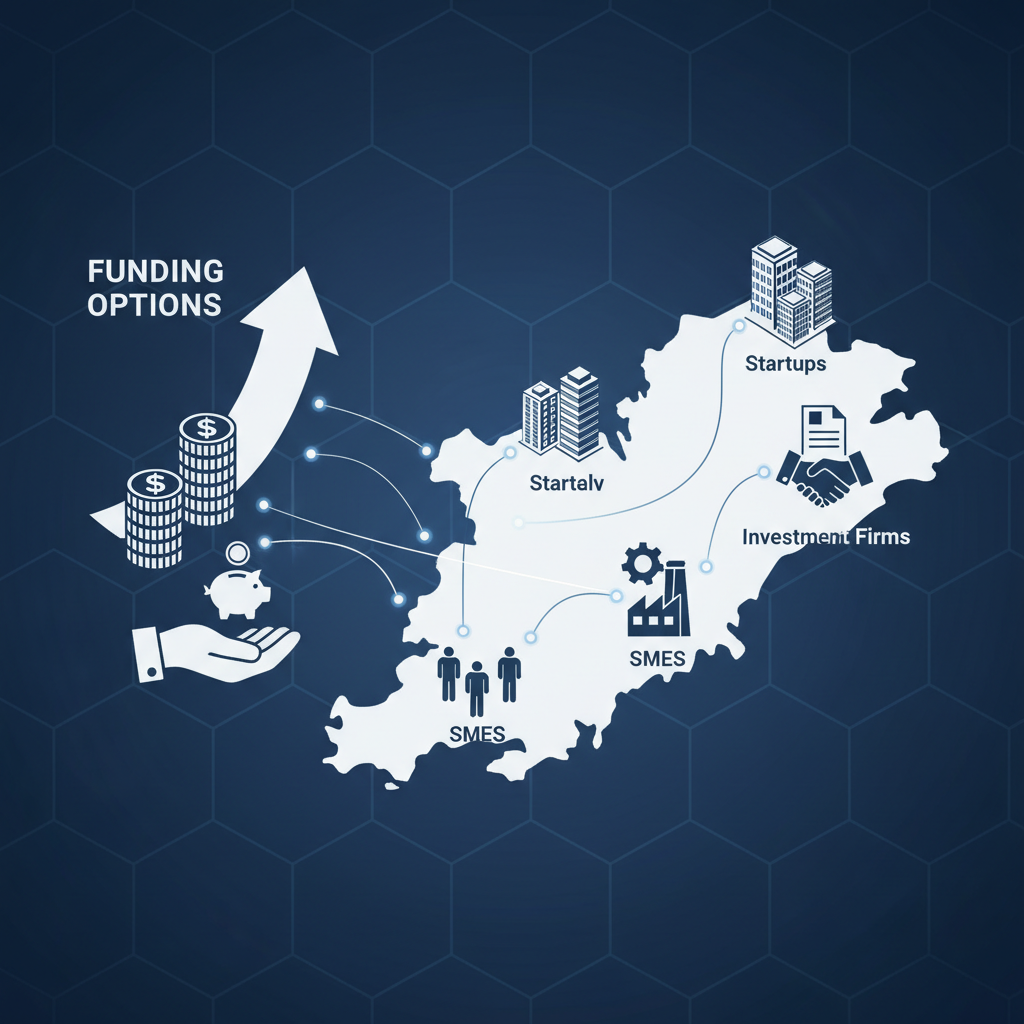
Navigating the Funding Landscape: A Comprehensive Guide for Startups and SMEs in Singapore
Singapore, a global hub for innovation and business, offers a diverse array of funding options for startups and Small and Medium-sized Enterprises (SMEs). This article provides a detailed exploration of these avenues, from government grants and venture capital to crowdfunding and debt financing, equipping entrepreneurs with the knowledge to secure the capital needed for growth.

Navigating the Funding Landscape: A Comprehensive Guide for Startups and SMEs in Singapore
Singapore has firmly established itself as a vibrant ecosystem for startups and Small and Medium-sized Enterprises (SMEs), fueled by a pro-business environment, strategic geographical location, and robust government support. A critical element for any burgeoning or expanding business is access to capital. Understanding the myriad of funding options available and strategically choosing the most suitable one can be the difference between stagnation and exponential growth. This comprehensive guide delves into the diverse funding landscape for startups and SMEs in Singapore, offering practical insights and actionable advice.
Government Grants and Schemes: A Foundation of Support
The Singaporean government, through various agencies, plays a pivotal role in nurturing local enterprises. Numerous grants and schemes are designed to support businesses at different stages of their lifecycle, from ideation to internationalisation. These non-dilutive forms of funding are highly attractive as they do not require entrepreneurs to give up equity.
Enterprise Singapore (ESG) Grants
Enterprise Singapore (ESG) is the primary agency championing enterprise development. They offer a suite of grants tailored to various business needs:
- Startup SG Founder: This grant provides capital to first-time entrepreneurs with innovative business ideas. It offers up to S$50,000 in equity-free funding, provided the startup can secure S$10,000 in co-matching funds from an approved third-party investor. The application process typically involves submitting a detailed business plan, financial projections, and presenting to a panel. Timelines can range from 2-4 months for approval.
- Productivity Solutions Grant (PSG): Aimed at helping businesses adopt IT solutions and equipment to enhance productivity, PSG covers up to 50% of the qualifying costs, capped at S$30,000 per solution. This is particularly beneficial for SMEs looking to digitalise their operations. The application is typically straightforward, often via the Business Grants Portal, with processing times of a few weeks.
- Market Readiness Assistance (MRA) Grant: For SMEs aspiring to expand overseas, the MRA grant supports internationalisation activities such as overseas market set-up, promotion, and business development. It covers up to 50% of eligible costs, capped at S$100,000 per company per new market over three years. This grant is crucial for businesses with global ambitions.
- Enterprise Development Grant (EDG): This grant supports companies looking to upgrade capabilities, innovate, or venture overseas. It covers up to 50% of qualifying project costs, encompassing consultancy, training, and equipment. EDG projects are typically larger in scope and require a more detailed proposal and justification, with an average processing time of 2-3 months.
Other Government-Backed Initiatives
Beyond ESG, other agencies offer specialised support:
- National Research Foundation (NRF): Through schemes like the Early Stage Venture Fund (ESVF), NRF co-invests with private sector venture capital funds in Singapore-based technology startups, aiming to catalyse private investment in deep tech.
- SkillsFuture Singapore (SSG): While not direct business funding, SSG schemes support workforce development and training, indirectly reducing operational costs and enhancing human capital, which is vital for growth.
Equity Financing: Sharing the Vision for Growth
Equity financing involves selling a portion of your company's ownership to investors in exchange for capital. While it means giving up a stake, it often brings strategic value, mentorship, and access to networks. This is a common route for high-growth startups.
Angel Investors
Angel investors are high-net-worth individuals who provide capital for startups, usually in exchange for convertible debt or ownership equity. They often bring not just money but also invaluable industry experience, mentorship, and connections. Finding angel investors often involves networking, pitching at startup events, or through incubators and accelerators. The typical investment size ranges from S$25,000 to S$500,000.
Venture Capital (VC) Firms
VC firms invest in companies with high growth potential, typically in exchange for a significant equity stake. Singapore boasts a vibrant VC landscape with both local and international players. They usually invest larger sums than angel investors, ranging from S$500,000 to tens of millions, across various funding rounds (seed, Series A, B, etc.). Securing VC funding requires a compelling business model, a strong management team, demonstrable traction, and a clear exit strategy. The due diligence process can be rigorous and lengthy, often taking several months.
Corporate Venture Capital (CVC)
Many large corporations have established CVC arms to invest in startups that align with their strategic objectives. This can offer not only capital but also potential partnerships, distribution channels, and industry expertise. Examples include Singtel Innov8 and CapitaLand's CVC initiatives.
Crowdfunding
Equity crowdfunding platforms allow a large number of individuals to invest small amounts in a company in exchange for equity. Platforms like FundedHere and CapBridge facilitate this. It's an effective way to raise capital while also building a community of loyal customers and advocates. Regulatory compliance under the Securities and Futures Act is crucial for these platforms.
Debt Financing: Leveraging Capital without Dilution
Debt financing involves borrowing money that must be repaid with interest. It allows businesses to retain full ownership but comes with repayment obligations and interest costs.
Bank Loans
Traditional bank loans remain a common funding source for SMEs. Singaporean banks offer various loan products, including working capital loans, term loans, and trade financing. Eligibility criteria typically include a solid business plan, financial track record, collateral, and a good credit history. The interest rates and repayment terms vary significantly depending on the bank and the loan product. The application process can take several weeks.
Government-Assisted Loan Schemes
To encourage lending to SMEs, the government partners with financial institutions on various schemes:
- Enterprise Financing Scheme (EFS): Administered by ESG, the EFS provides government risk-sharing with participating financial institutions (PFIs) for SME loans. This makes it easier for SMEs to obtain financing for various purposes, including working capital, trade, fixed assets, and mergers & acquisitions. The government shares up to 70% of the risk for general loans and up to 90% for young companies (less than 5 years old) and companies looking to internationalise. This significantly reduces the risk for banks, making them more willing to lend.
- Temporary Bridging Loan Programme (TBLP): While often introduced during economic downturns, similar schemes may be available to provide liquidity support to businesses.
Alternative Lenders and Fintech Platforms
The rise of fintech has introduced new debt financing options. Online lending platforms and peer-to-peer (P2P) lending platforms offer faster access to funds, often with more flexible criteria than traditional banks. However, interest rates can sometimes be higher, reflecting the increased risk. Examples include Funding Societies and Validus. These platforms are regulated by the Monetary Authority of Singapore (MAS).
Other Funding Avenues and Considerations
Incubators and Accelerators
Programs like Startupbootcamp, Antler, and BLOCK71 provide not only mentorship, resources, and office space but often also provide seed funding in exchange for a small equity stake. They are excellent launchpads for early-stage startups.
Grants from Corporations and Foundations
Some large corporations or philanthropic foundations offer grants for specific types of innovation or social impact initiatives. These are less common but worth exploring if your business aligns with their mission.
Bootstrapping
Self-funding, or bootstrapping, involves using personal savings, revenue generated from sales, or minimal external capital to grow the business. While challenging, it allows founders to maintain full control and ownership. It's often the initial stage for many successful businesses before seeking external capital.
Key Considerations for Securing Funding
- Robust Business Plan: A clear, concise, and compelling business plan is paramount, outlining your value proposition, market analysis, competitive advantage, operational strategy, and financial projections.
- Strong Management Team: Investors back people as much as ideas. A capable and committed team is crucial.
- Financial Projections: Realistic and well-supported financial forecasts are essential for demonstrating viability and potential returns.
- Legal and Compliance: Ensure your company is properly registered, compliant with all local regulations, and has sound legal documentation.
- Networking: Building relationships with investors, mentors, and industry peers can open doors to funding opportunities.
- Pitch Deck: A well-crafted pitch deck summarising your business opportunity is vital for attracting interest.
Conclusion
Singapore's funding ecosystem for startups and SMEs is dynamic and multifaceted, offering a spectrum of options to suit various business stages and needs. From generous government grants designed to de-risk innovation and foster growth, to the sophisticated world of venture capital and the accessibility of debt financing, entrepreneurs have ample avenues to explore. The key to successful fundraising lies in a thorough understanding of these options, meticulous preparation, and strategic alignment with the right investors or financial institutions. By leveraging the supportive environment and diverse capital sources available, Singaporean businesses are well-positioned to innovate, scale, and achieve their full potential, contributing significantly to the nation's economic vibrancy.
Ultimately, securing funding is not merely about obtaining capital; it's about forging partnerships that provide strategic value, expertise, and a shared vision for success. Entrepreneurs should carefully evaluate the pros and cons of each funding type, considering dilution, repayment obligations, and the strategic support offered, to make informed decisions that best serve their long-term growth objectives.