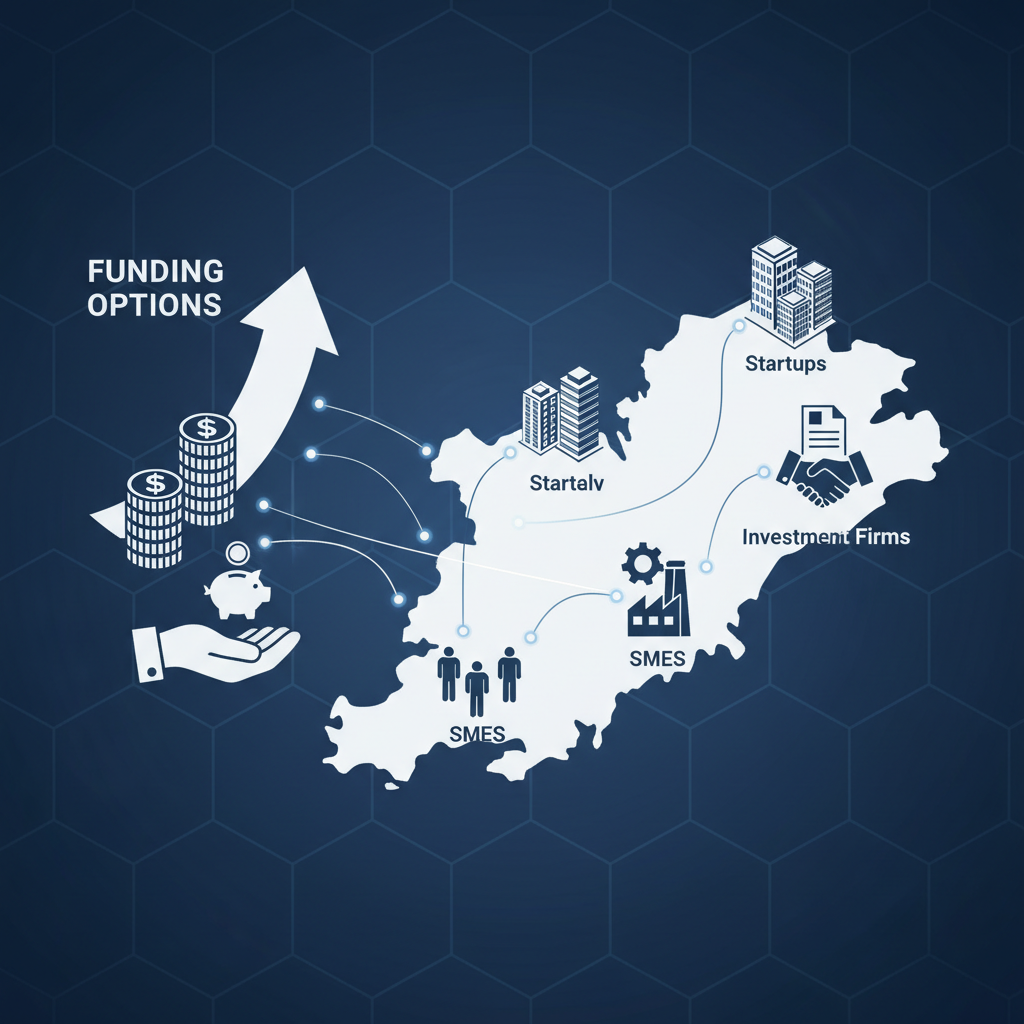
Navigating the Funding Landscape: Essential Options for Startups and SMEs in Ireland
Securing adequate funding is a critical challenge for startups and Small and Medium-sized Enterprises (SMEs) in Ireland. This comprehensive article explores the diverse funding avenues available, from traditional bank loans to innovative equity and grant schemes, providing practical insights for entrepreneurs seeking to fuel their growth.

Navigating the Funding Landscape: Essential Options for Startups and SMEs in Ireland
Ireland's vibrant entrepreneurial ecosystem, coupled with its strategic location and pro-business environment, makes it an attractive hub for startups and SMEs. However, a common hurdle for many aspiring and established businesses is securing the necessary capital to launch, grow, and innovate. Understanding the diverse funding options available and how to access them is paramount for success. This article delves into the various funding avenues, offering practical guidance for Irish businesses.
Traditional Debt Financing: Bank Loans and Overdrafts
Traditional bank financing remains a cornerstone for many Irish SMEs, particularly those with established trading histories and demonstrable cash flow. Irish banks, including AIB, Bank of Ireland, and Ulster Bank (though Ulster Bank is exiting the market, its existing loan book and processes still influence the landscape), offer a range of products tailored for businesses.
Term Loans
Term loans are perhaps the most common form of bank financing. These are typically provided for a fixed period, with regular repayments of principal and interest. They are suitable for funding specific capital expenditures, such as purchasing equipment, expanding premises, or acquiring another business. Interest rates can be fixed or variable, and collateral is often required, which could include property, machinery, or even personal guarantees from directors. The application process usually involves submitting a detailed business plan, financial projections, and historical financial statements. Banks will assess the business's creditworthiness, repayment capacity, and the viability of the project being funded. Approval times can vary from a few weeks to several months, depending on the complexity of the application and the bank's internal processes.
Overdraft Facilities
Overdrafts provide a flexible short-term funding solution, allowing businesses to draw more money than they have in their current account, up to an agreed limit. This is particularly useful for managing working capital fluctuations, covering unexpected expenses, or bridging gaps in cash flow. While flexible, overdrafts typically carry higher interest rates than term loans and are not suitable for long-term financing needs. Banks usually review overdraft facilities annually, and their availability is often tied to the business's overall banking relationship and financial health.
Invoice Finance (Factoring and Discounting)
Invoice finance allows businesses to unlock cash tied up in unpaid invoices. Factoring involves selling your invoices to a third-party finance provider at a discount. The provider then takes on the responsibility of collecting the debt. Invoice discounting is similar, but the business retains control over its sales ledger and debt collection. These options are particularly beneficial for businesses with long payment terms from customers, providing immediate cash flow without incurring new debt. Costs typically include a service fee (a percentage of the invoice value) and an interest charge on the funds advanced. This can be a vital lifeline for growing businesses struggling with cash flow, but it's important to understand the associated costs and the impact on customer relationships if factoring is chosen.
Equity Financing: Sharing Ownership for Growth
For high-growth startups and SMEs, particularly those with innovative products or services, equity financing can provide significant capital without the burden of debt repayment. This involves selling a stake in the company to investors in exchange for funding.
Angel Investors
Angel investors are high-net-worth individuals who invest their personal capital in early-stage companies, often in exchange for an equity stake. Beyond capital, angels frequently bring valuable industry experience, mentorship, and networks. They typically invest smaller sums than venture capitalists, ranging from tens of thousands to a few hundred thousand euros. Finding angel investors often involves networking, pitching at startup events, or connecting through angel investor networks like the Halo Business Angel Network (HBAN) in Ireland. The process can be highly relationship-driven, and due diligence by angels can be rigorous, focusing on the team, market opportunity, and scalability.
Venture Capital (VC) Firms
Venture Capital firms invest in companies with high growth potential, often in technology, life sciences, or other innovative sectors. They typically invest larger sums than angel investors, ranging from hundreds of thousands to millions of euros, in exchange for a significant equity stake. VC firms not only provide capital but also strategic guidance, operational support, and access to their extensive networks. Examples of active VC firms in Ireland include Enterprise Equity, ACT Venture Capital, and Delta Partners. The VC funding process is highly competitive and involves multiple rounds of due diligence, detailed business plans, and often complex legal agreements. It's crucial for founders to understand the implications of giving up equity and control.
Seed Funding and Accelerators
Seed funding is early-stage investment, often from angels, small VC funds, or accelerators, designed to help a startup develop its product, conduct market research, and build its initial team. Accelerators, such as NDRC (now Dogpatch Labs) or Techstars, provide a structured program that includes mentorship, resources, and often a small amount of seed funding in exchange for equity. These programs are invaluable for refining business models, gaining exposure, and preparing for subsequent funding rounds.
Government Grants and Supports: Non-Dilutive Funding
The Irish government, through various agencies, offers a robust suite of grants and support programmes designed to foster innovation, job creation, and regional development. These are particularly attractive as they are non-dilutive, meaning businesses do not give up equity.
Enterprise Ireland (EI)
Enterprise Ireland is the government agency responsible for the development and growth of Irish enterprises in world markets. They offer a wide range of funding programmes for eligible companies, primarily those with the potential to export and scale internationally. Key grants include:
- Competitive Start Fund (CSF): Provides early-stage funding for new startups with global ambition. Typically offers €50,000 for a 10% equity stake.
- High Potential Start-Up (HPSU) Fund: Supports companies with the potential to create 10 jobs and achieve €1 million in sales within three to four years of starting. Funding levels vary significantly based on the business plan.
- Research & Development (R&D) Grants: Supports companies undertaking R&D activities, helping to de-risk innovation projects.
- Market Access Grants: Assists companies in exploring and entering new export markets.
The application process for EI grants is rigorous, requiring detailed business plans, financial projections, and a clear demonstration of eligibility criteria. Engagement with an EI Development Advisor is often a crucial first step.
Local Enterprise Offices (LEOs)
For micro-enterprises and small businesses trading primarily within Ireland, the Local Enterprise Offices (LEOs) are an invaluable resource. Each county has a LEO that provides a range of supports, including training, mentoring, and financial assistance. LEO grants typically include:
- Priming Grants: For businesses trading for less than 18 months, supporting capital investment, salary costs, and marketing. Maximum grant aid is usually €80,000.
- Business Expansion Grants: For businesses trading for more than 18 months, supporting expansion projects. Maximum grant aid is usually €80,000.
- Feasibility Study Grants: To investigate the viability of a new business idea or project. Maximum grant aid is typically €15,000.
LEO grants are generally easier to access than EI grants for smaller businesses, but they still require a solid business plan and clear justification for the funding. Eligibility criteria and application processes are managed at the local level.
Other Government Supports
- Strategic Banking Corporation of Ireland (SBCI): The SBCI works with commercial lenders to provide lower-cost, longer-term, and more flexible funding to Irish SMEs. They don't lend directly but provide a guarantee scheme and on-lending facilities through partner banks.
- Revenue Commissioners R&D Tax Credit: While not a direct grant, this allows companies to claim a tax credit for qualifying R&D expenditure, effectively reducing their corporation tax liability or providing a cash refund. It can be a significant source of funding for innovative companies.
Alternative and Emerging Funding Options
Beyond traditional and government-backed options, a number of alternative funding sources have gained prominence.
Crowdfunding
Crowdfunding platforms allow businesses to raise small amounts of capital from a large number of individuals, typically via online platforms. There are different types:
- Reward-based crowdfunding: Individuals pledge money in exchange for a product or service (e.g., Kickstarter, Indiegogo).
- Equity crowdfunding: Individuals invest in exchange for an equity stake in the company (e.g., Seedrs, Crowdcube – though these are UK-based, Irish companies can list).
- Debt crowdfunding (Peer-to-peer lending): Individuals lend money to businesses in exchange for interest payments (e.g., Linked Finance in Ireland).
Crowdfunding can be an excellent way to validate market demand, build a community around a product, and raise capital. However, it requires a compelling campaign, significant marketing effort, and careful management of investor relations.
Business Angels and Networks
While mentioned under equity, it's worth reiterating the importance of dedicated business angel networks in Ireland, such as the Halo Business Angel Network (HBAN). These networks facilitate connections between entrepreneurs and potential angel investors, streamlining the process and increasing the chances of securing funding. They often host pitch events and provide guidance on preparing for investment.
Conclusion
The funding landscape for startups and SMEs in Ireland is rich and diverse, offering a spectrum of options to suit different business stages, sectors, and growth ambitions. From the stability of traditional bank loans and the strategic capital of venture capitalists to the non-dilutive support of government grants and the community power of crowdfunding, entrepreneurs have numerous avenues to explore. The key to success lies in a thorough understanding of each option's requirements, benefits, and drawbacks, coupled with a meticulously prepared business plan and a clear articulation of funding needs. Engaging with financial advisors, LEOs, Enterprise Ireland, and angel networks can significantly enhance a business's chances of securing the capital required to thrive and contribute to Ireland's dynamic economy. Careful planning, persistent effort, and strategic networking are indispensable for navigating this complex but rewarding journey.